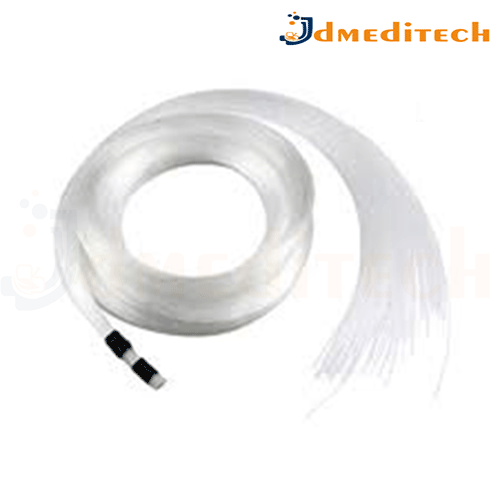
An LED Fiber Optic Cable is a specialized medical cable used to transmit LED light from a light source to endoscopic or laparoscopic instruments during surgery.
Features:
Made of high-quality optical fibers for efficient light transmission
Compatible with LED, Xenon, or Halogen light sources
Flexible, durable, and heat-resistant
Available in various lengths and diameters
Offers minimal light loss and uniform illumination
Uses:
Delivers bright, focused light to endoscopes, laparoscopes, or other surgical scopes
Essential for clear visualization during minimally invasive surgeries
Used in ENT, general surgery, urology, gynecology, and more
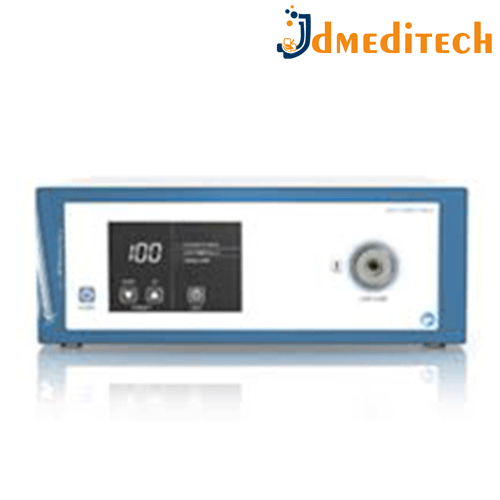
A Xenon Light Source is a high-intensity medical lighting device that uses a xenon gas bulb to produce bright, daylight-like illumination for endoscopic and laparoscopic procedures.
Features:
Produces very bright, white light (close to natural daylight)
High color rendering index (CRI) for accurate tissue visualization
Typically ranges from 100W to 300W output
Compatible with fiber optic light cables and scopes
Shorter bulb lifespan (usually 500–1,000 hours) compared to LED
Uses:
Used in laparoscopy, endoscopy, arthroscopy, ENT, and urology
Ideal for procedures requiring high-intensity, color-accurate lighting
Provides clear, detailed visualization for safe and precise surgery
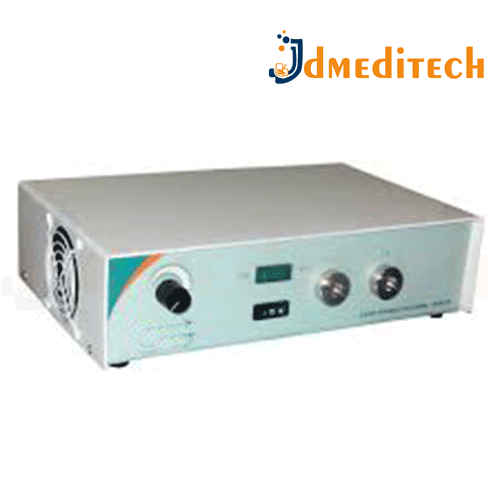
A Halogen Light Source is a medical lighting device that uses a halogen bulb to provide bright, focused illumination during endoscopic or laparoscopic procedures.
Features:
Uses a halogen bulb for intense, white light
Lower initial cost compared to LED systems
Offers adjustable brightness levels
Compatible with fiber optic light cables
Generates more heat and has a shorter lifespan than LED (typically ~500–1,000 hours)
Uses:
Provides illumination during endoscopy, laparoscopy, ENT, and urology procedures
Helps surgeons clearly visualize internal structures
Used where budget-friendly solutions are needed
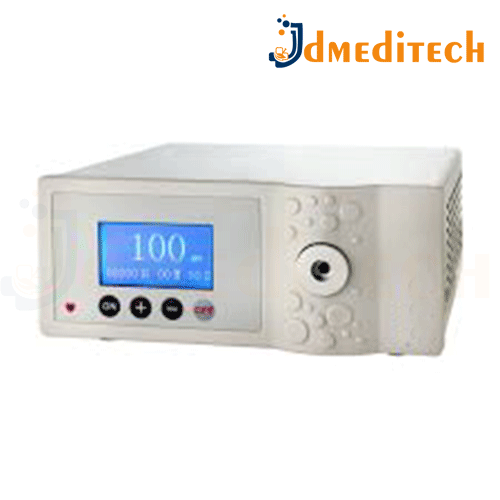
An LED Light Source is a medical device that provides bright, white illumination for endoscopic or laparoscopic procedures using energy-efficient LED technology.
Features:
Uses Light Emitting Diodes (LEDs) for long-lasting, cool light
Delivers consistent brightness and color temperature
Low heat emission, protecting scopes and tissues
Energy-efficient and long lifespan (often 20,000+ hours)
Compatible with various endoscopes, laparoscopes, and fiber optic cables
Uses:
Illuminates internal body cavities during minimally invasive surgeries
Used in laparoscopy, endoscopy, ENT, urology, and arthroscopy
Provides clear visualization for safe and accurate procedures
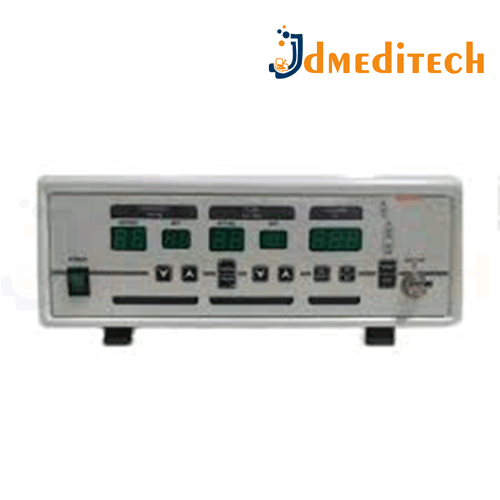
The CO₂ Insufflator – CO₂+ is a medical device used in laparoscopic (minimally invasive) surgeries to inflate the abdominal cavity with carbon dioxide (CO₂) gas, creating space for surgeons to operate.
Features:
Controlled CO₂ gas flow and pressure settings
Digital display for pressure, flow rate, and volume
Automatic pressure regulation
Compatible with standard laparoscopic trocars
Alarm systems for safety (overpressure, low gas, etc.)
Uses:
Insufflates the abdomen for better visibility and working space
Maintains stable intra-abdominal pressure during surgery
Essential for procedures like laparoscopic cholecystectomy, appendectomy, hysterectomy, etc.
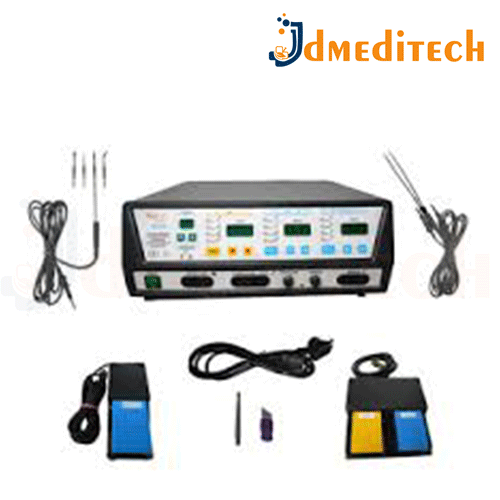
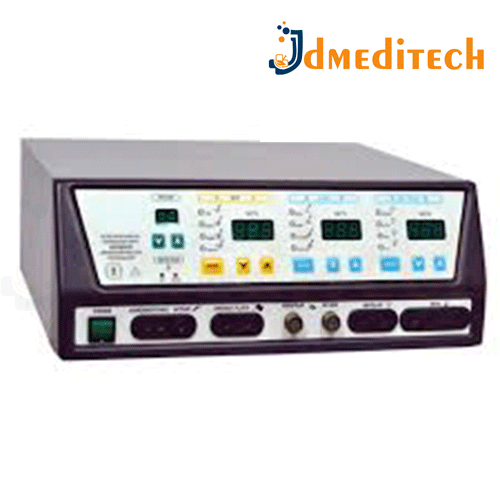
The Vessel Sealing System with ESU 400 (Safeseal + ESU) is a combined electrosurgical unit and vessel sealing system used in open and laparoscopic surgeries to cut, coagulate, and seal blood vessels effectively.
Key Features:
High power output up to 400W
Monopolar & bipolar modes for cutting and coagulation
Advanced vessel sealing without clips or sutures
Auto stop after sealing to prevent overuse
Safety alarms and leakage protection
99 programmable settings for user convenience
Works with inverter, UPS, or generator
Uses:
Seals and cuts tissue in gynecology, urology, general, and laparoscopic surgeries
Reduces bleeding, surgery time, and improves post-op recovery
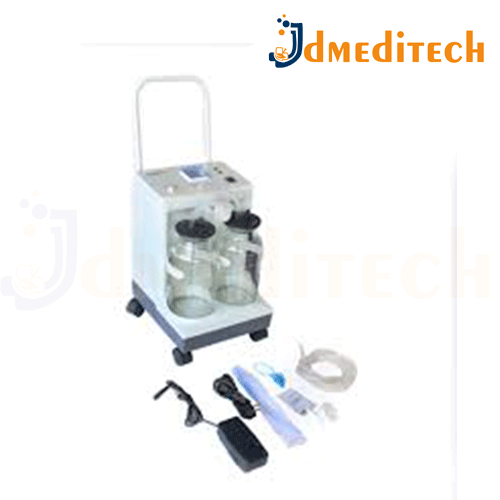
A Laparoscopy Suction Machine is a medical device used during laparoscopic surgeries to remove fluids, blood, or smoke from the surgical site, ensuring clear visibility.
Features:
High vacuum pressure for effective suction
Compact, portable design
Equipped with collection jars and filters
Footswitch or button-controlled operation
Sterilizable tubing and accessories
Uses:
Removes blood, irrigation fluid, or surgical smoke from the abdomen
Maintains clear view during laparoscopy
Helps keep the surgical site clean and safe
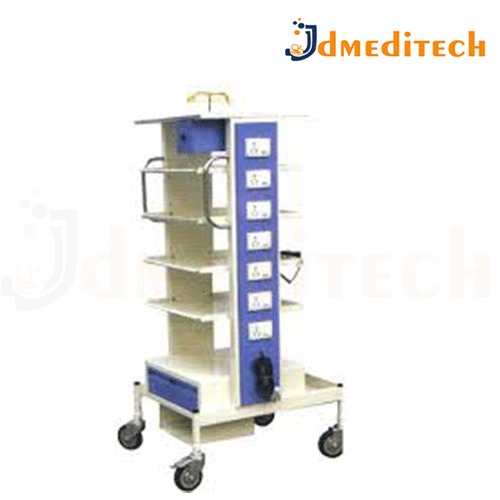
A Laparoscopy Trolley is a specially designed mobile cart used to organize and support laparoscopic equipment during minimally invasive surgeries.
Features:
Multiple shelves to hold monitor, insufflator, light source, camera system, etc.
Wheels with brakes for easy mobility and stability
Cable management slots for safety and neat setup
Made of durable, rust-proof materials (usually stainless steel or powder-coated metal)
Optional drawer or accessory holders
Uses:
Keeps all laparoscopic devices in one place for easy access
Enhances workflow and efficiency in the operating room
Ensures safe and organized setup during surgeries
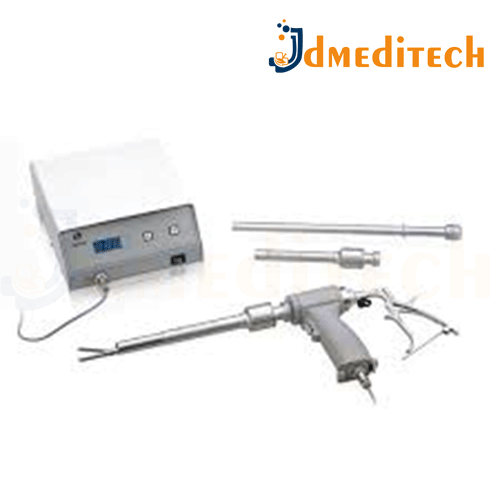
A Laparoscopic Morcellator is a surgical instrument used in minimally invasive procedures to cut and remove large tissues (like fibroids or uterus) through small incisions.
Features:
Rotating blade or cutter for tissue fragmentation
Electric or manual operation
Slim, long design for laparoscopic access
Compatible with trocars and laparoscopic instruments
Safe housing to minimize risk to surrounding tissues
Uses:
Used in myomectomy, hysterectomy, and other gynecologic or abdominal surgeries
Allows removal of large tissue masses through small incisions
Minimizes scarring, pain, and recovery time
The Vessel Sealing System – Safeseal+ is an advanced electrosurgical device used to seal blood vessels during surgery without using clips or sutures.
Features:
Permanent vessel sealing using body’s collagen
High sealing strength, handles high blood pressure
Auto-stop system after sealing
Safety alarms and leakage protection
99 programmable settings
Uses:
Seals vessels in laparoscopic and open surgeries
Used in gynecology, general surgery, urology, and more
Reduces bleeding, surgery time, and recovery period