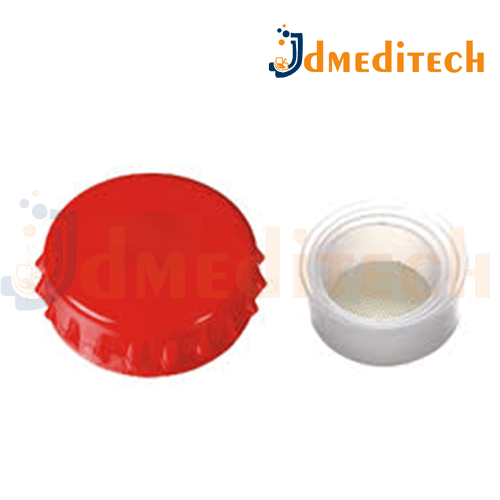
A Stone Collector is a medical device used in urology to retrieve and collect kidney or ureteric stones during endoscopic procedures like:
URS (Ureteroscopy)
PCNL (Percutaneous Nephrolithotomy)
Cystolitholapaxy
It is typically used after fragmentation of stones (using lasers or other tools) to safely extract the pieces from the urinary tract.
Key Features of a Stone Collector:
Fine Mesh Basket or Net – Designed to trap and retrieve small stone fragments.
Flexible or Rigid Shaft – Allows navigation through ureter or kidney during endoscopy.
Ergonomic Handle – Provides precise control for opening/closing the basket.
Radiopaque Markers – Help in visualizing the device under X-ray or fluoroscopy.
Single-use or Reusable – Available in both disposable and sterilizable forms.
Compatible with Ureteroscopes – Designed to work with standard endoscopic instruments.
Common Types of Stone Collectors:
Nitinol Basket (e.g., Dormia Basket) – Common for ureteral stone retrieval
Stone Retrieval Net – Used for softer or fragmented stones
Graspers/Forceps – For larger or harder fragments
Uses:
Removal of kidney stones or ureteric stones during endoscopic surgery
Preventing stone fragments from causing blockage
Ensuring complete stone clearance post-lithotripsy
Collecting stones for chemical analysis (to prevent recurrence)
A TUR Set is a surgical instrument set used for Transurethral Resection (TUR) procedures, most commonly for the prostate (TURP) or bladder tumors (TURBT), performed through the urethra without external incisions.
Key Features:
Includes resectoscope sheath, working element, electrode loops, and irrigation channels
Compatible with electrosurgical units for cutting/coagulating tissue
Optical channel for attaching a telescope for clear visualization
Inflow/outflow system for continuous irrigation
Made from high-grade stainless steel or medical alloys
Available in monopolar or bipolar versions
Uses:
TURP (Transurethral Resection of Prostate) for treating benign prostatic hyperplasia
TURBT (Transurethral Resection of Bladder Tumor)
Removes prostatic tissue or bladder tumors without open surgery
Offers minimally invasive, quick recovery option for urinary obstruction or cancer
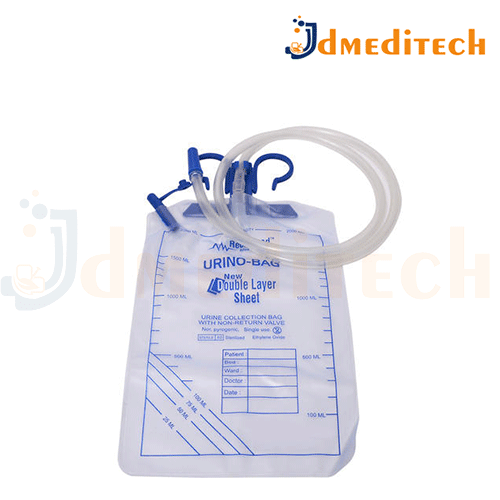
A Urine Collecting Bag is a medical device used to collect and store urine from patients who are unable to urinate normally, typically via a catheter.
Key Features:
Sterile, leak-proof bag with drainage tube
Graduated markings for urine measurement
Anti-reflux valve to prevent backflow
Outlet tap for easy emptying
Available in various sizes (500 ml to 2000 ml)
Straps or hangers for bed or leg attachment
Uses:
Used in hospitals, home care, or after surgery
For bedridden or catheterized patients
Helps monitor urine output and fluid balance
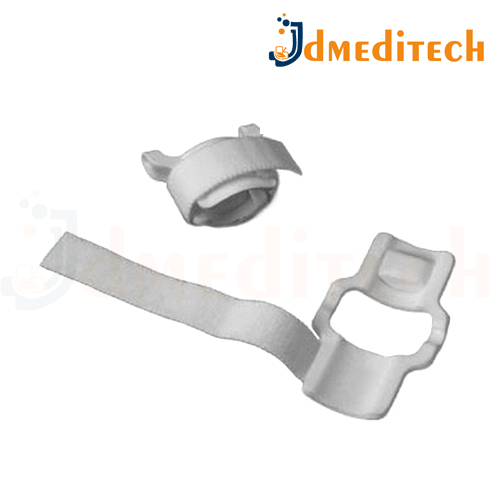
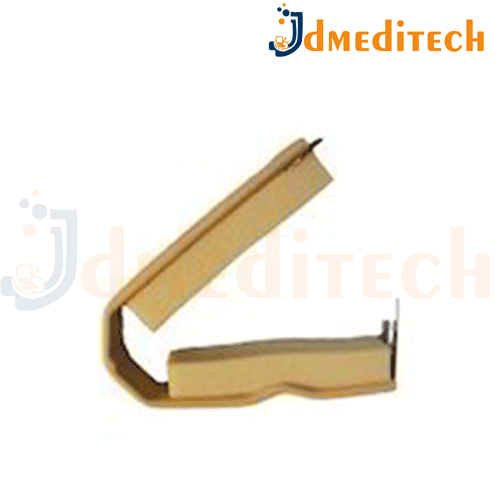
The ContiStrap Clamp is a non-invasive medical device designed to help men manage urinary incontinence by gently compressing the urethra to prevent involuntary urine leakage. It is commonly used after prostate surgery or in cases of stress incontinence.
Key Features of the ContiStrap Clamp:
Adjustable Compression Strap
Allows users to control the pressure for comfort and effectiveness.
Soft, Cushioned Material
Prevents skin irritation and ensures all-day comfort.
Velcro Closure System
Easy to apply, adjust, and remove as needed.
Lightweight & Discreet
Can be worn under clothing without being visible.
Reusable and Durable
Designed for repeated use with proper hygiene.
Non-Surgical Solution
No medication or invasive treatment required.
Common Use Cases:
Men experiencing incontinence after prostate surgery
Mild to moderate urinary leakage
For temporary or long-term continence management
A Penile Clamp is a non-invasive medical device used by men to manage urinary incontinence. It works by gently compressing the urethra (the tube that carries urine out of the body) to prevent involuntary leakage, especially after prostate surgery or due to weak pelvic muscles.
Key Features of a Penile Clamp:
Urethral Control
Applies light pressure to the urethra to stop urine flow without affecting blood circulation.
Adjustable Size
Most clamps come with adjustable settings to ensure a secure and comfortable fit.
Soft Padding
Made with foam, rubber, or silicone to prevent skin irritation and provide comfort.
Reusable
Can be used multiple times with proper cleaning and care.
Lightweight & Discreet
Easily worn under clothing without being visible.
No Surgery or Medication Required
Offers a simple, cost-effective alternative to invasive treatments.
Common Use Cases:
Post-prostate surgery incontinence
Stress or urge urinary incontinence
Neurogenic bladder conditions
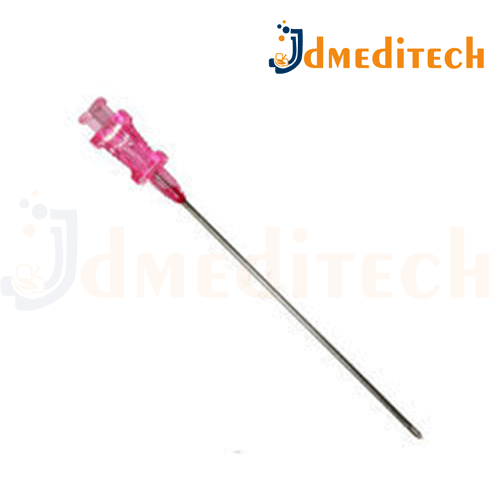
An Introducing Needle is a medical device used to gain initial access to a body cavity, vessel, or organ during procedures like catheterization, drainage, or guidewire insertion. It provides a safe and controlled way to introduce other medical instruments into the body.
Key Features of an Introducing Needle:
Hollow Lumen
Allows for the passage of guidewires, fluids, or catheters.
Sharp Beveled Tip
Ensures precise and clean entry into tissue or vessels.
Radiopaque Markings
Visible under imaging (X-ray, fluoroscopy) for accurate placement.
Ergonomic Grip or Hub
Provides control and comfort during procedures.
Compatible with Guidewires
Specifically designed to work with interventional guidewires.
Sterile and Disposable
Single-use to prevent infection and ensure hygiene.
Common Uses:
Inserting catheters or drainage tubes
Vascular access (e.g., central line placement)
Urology and interventional radiology procedures
Assisting in percutaneous nephrostomy or abscess drainage
A Chiba needle is a thin, flexible, and hollow medical needle commonly used for fine-needle aspiration (FNA), biopsies, and diagnostic or interventional radiology procedures. It allows precise access to internal organs or fluid collections, especially under ultrasound or CT guidance.
Key Features of a Chiba Needle:
Thin Gauge (Usually 22G–25G)
Minimally invasive and ideal for delicate structures.
Flexible Shaft
Allows easy navigation through tissue and around organs.
Beveled Sharp Tip
Ensures clean penetration with minimal tissue damage.
Radiopaque Markings
Visible under fluoroscopy or CT for precise positioning.
Luer Lock Hub
Connects securely to syringes for aspiration or contrast injection.
Echogenic Tip (Optional)
Enhances visibility under ultrasound guidance.
Sterile & Disposable
Designed for single use to reduce infection risk.
Common Uses:
Fine Needle Aspiration (FNA) – for lung, liver, pancreas, or lymph node biopsy.
Thoracentesis – draining fluid from the pleural space.
Amniocentesis – sampling amniotic fluid during pregnancy.
Spinal or epidural procedures – in select cases requiring fine access.
Biliary drainage or cholangiography – accessing bile ducts in radiologic procedures.
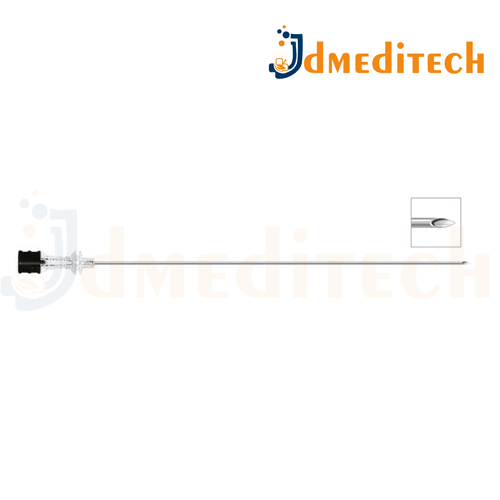
An Initial Puncture Needle is a sharp, hollow surgical needle used to make the first access into the body during minimally invasive procedures such as laparoscopy, nephrostomy, or catheter insertion. It helps in establishing a safe and controlled entry path for guidewires, catheters, or other instruments.
Key Features of an Initial Puncture Needle:
Sharp Beveled Tip
Ensures smooth and precise penetration through skin and tissue.
Hollow Lumen
Allows insertion of guidewires or fluid aspiration once access is gained.
Radiopaque Markings
Visible under X-ray or fluoroscopy for accurate placement.
Different Gauge Sizes
Available in various diameters and lengths to suit different procedures.
Ergonomic Grip
Designed for stability and control during puncture.
Sterile & Disposable
Single-use design reduces infection risk and maintains procedural hygiene.
Common Applications:
Percutaneous nephrostomy (kidney drainage)
Central venous catheter insertion
Laparoscopic entry
Fluid aspiration or drainage
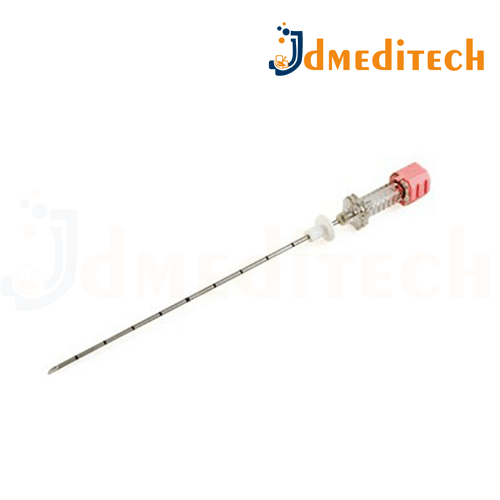
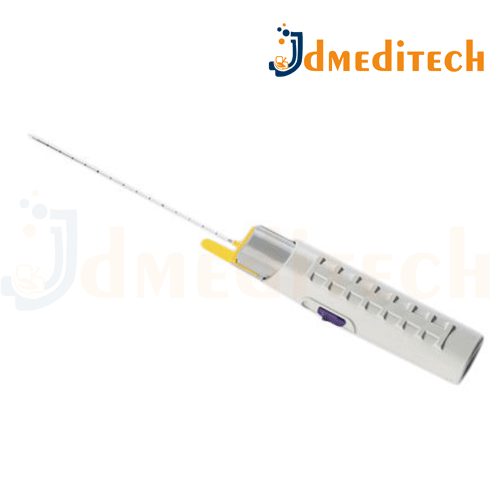
An Automatic Biopsy Gun is a medical device used to obtain tissue samples (biopsies) from organs or tissues for diagnostic purposes, with a spring-loaded mechanism for quick, precise sampling.
Features:
Spring-loaded mechanism for automatic tissue collection
Single or multiple sample collection capability
Equipped with disposable biopsy needles
Adjustable needle depth for accurate sampling
Ergonomically designed handle for ease of use
Sterile and ready-to-use
Uses:
Commonly used in cancer diagnosis, particularly for liver, prostate, kidney, and lung biopsies
Helps in tissue diagnosis for conditions like tumors, infections, or inflammation
Suitable for minimally invasive procedures, offering a less painful alternative to surgical biopsies
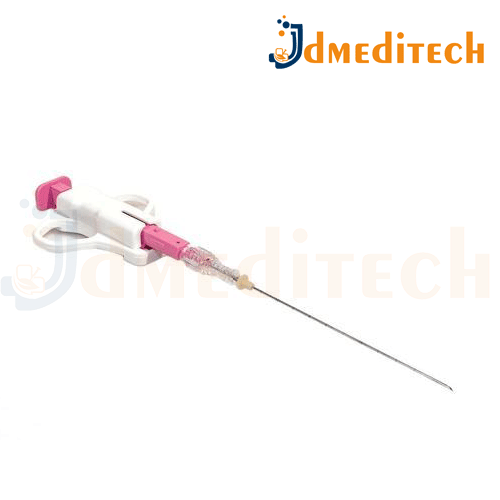
A Semi-Automatic Biopsy Gun is a medical device used to obtain tissue samples for diagnosis, especially in oncology and radiology, using a spring-loaded mechanism that advances the needle into the tissue.
Key Features:
Spring-loaded firing system for quick and precise sampling
Manual or single-trigger activation
Compatible with core biopsy needles
Depth control for accurate targeting
Lightweight and ergonomic for easy handling
Sterile and often single-use
Uses:
Collect tissue samples from organs like breast, liver, kidney, or prostate
Used in image-guided biopsies (ultrasound, CT, MRI)
Ideal for minimally invasive and accurate diagnosis of tumors or lesions