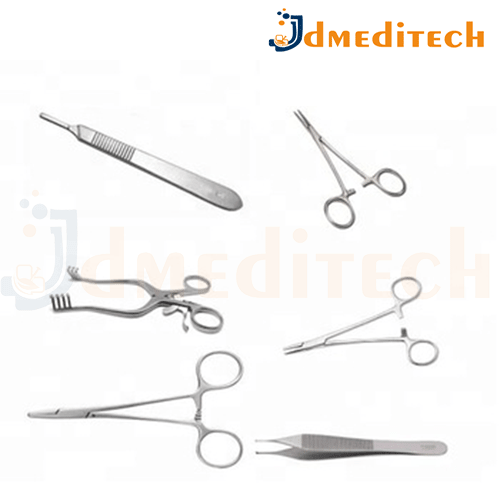
An AV Fistula Set is a collection of medical instruments used to create an arteriovenous (AV) fistula, a surgical connection between an artery and vein, typically for hemodialysis access.
Features:
Includes instruments like scalpels, needles, forceps, and sutures for fistula creation
Made of high-quality, sterilizable materials
Precise design for minimal tissue trauma
Ergonomically designed tools for surgeon comfort
Uses:
Creates AV fistulas for hemodialysis patients to facilitate blood flow during dialysis
Ensures long-term vascular access for dialysis treatments
Commonly used in vascular surgery for chronic kidney disease patients
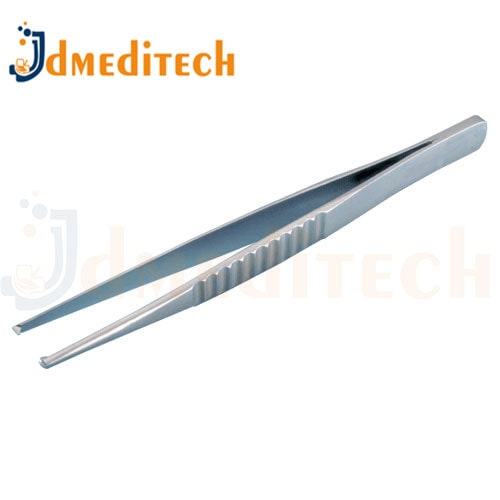
A Dissecting Forceps is a handheld surgical instrument used to grasp, manipulate, or hold tissues during dissection or surgery. It is commonly used across general surgery, ENT, plastic surgery, gynecology, and more.
Key Features of Dissecting Forceps
Function – Used to grasp, hold, or separate tissues gently during dissection.
Tip Type – Available with plain (smooth) tips or toothed tips depending on tissue type.
Material – Made from surgical stainless steel, durable and autoclavable.
Length – Comes in various lengths (e.g., 6″, 8″, 10″) for shallow or deep surgical areas.
Grip Design – Spring-action design with serrated handles for a non-slip grip.
Variants – Plain Forceps: For delicate tissues
– Toothed Forceps: For tougher tissues like skin or fascia
Common Surgical Uses
Tissue handling during dissection or suturing
Holding skin edges while suturing or cutting
Removing small foreign bodies
Separating delicate structures in layered dissection
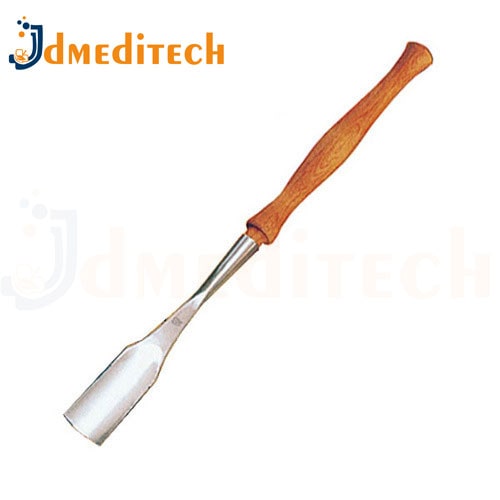
A Urethroplasty Gouge is a specialized surgical instrument used in urethroplasty, a procedure to repair or reconstruct the urethra.
Features:
Made of stainless steel
Has a curved, sharp-edged tip for precise tissue removal
Designed to excise scar tissue or strictures within the urethra
Available in various sizes for different surgical needs
Uses:
Removes fibrotic tissue or strictures in the urethra
Aids in restoring normal urinary flow
Used in urethral stricture surgeries and reconstructive urology
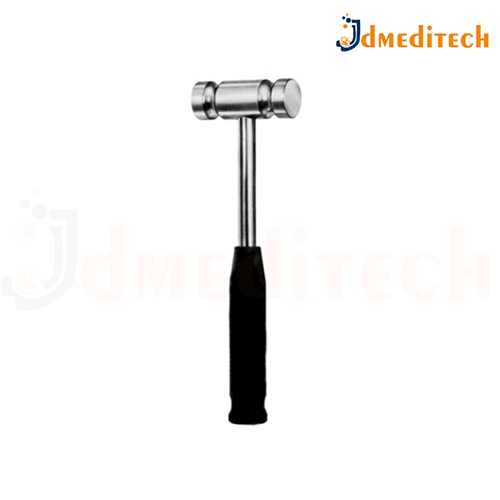
A Surgical Hammer is a medical tool used by surgeons to apply force in a controlled manner during various surgical procedures. It is especially used in orthopedic surgeries for tasks like fracture reduction, osteotomy, and bone fixation.
Key Features:
Head Type: Comes with various heads (e.g., flat, round, or concave) depending on the specific surgical needs.
Material: Typically made from stainless steel or lightweight materials to ensure strength and balance.
Handle: Designed for ergonomic grip to allow precision and control during use.
Durability: Sterilizable and reusable for multiple procedures.
Uses:
Primarily used in orthopedic surgery to tap or strike surgical instruments like pins, screws, or osteotomes during bone manipulation.
Can also be used in neurosurgery and other procedures requiring precision tapping.
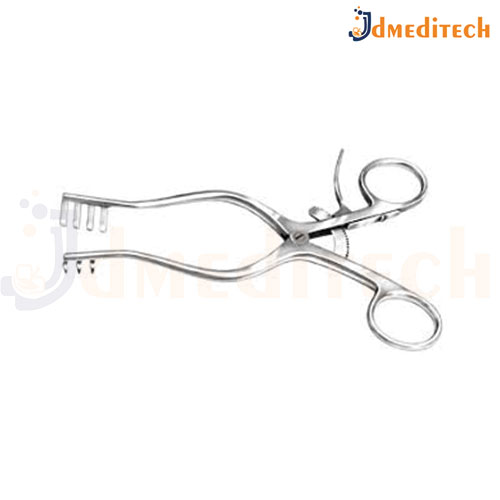
A Mastoid Retractor is a self-retaining surgical instrument used primarily in ENT (Ear, Nose, Throat) surgeries—especially mastoidectomy procedures—to retract skin, muscle, and soft tissues around the mastoid bone (located behind the ear). It provides a clear, stable surgical field for the surgeon by holding tissues apart.
Key Features of Mastoid Retractor
Self-Retaining Design – Has a locking mechanism that keeps the blades open without manual effort.
Two or Three Prongs – Ends typically have 2 or 3 sharp or blunt prongs to grip tissue securely.
Spring or Ratchet Mechanism – Keeps the retractor in position during long procedures.
Material – Made from high-grade stainless steel – corrosion-resistant and reusable.
Size – Compact design suitable for small surgical spaces around the ear.
Uses in Surgical Procedures
Mastoidectomy – To hold back the skin and soft tissue for bone drilling around the mastoid.
Ear Surgeries – Such as cholesteatoma removal or middle ear reconstruction.
Neurosurgery – Occasionally used when accessing the posterior cranial fossa via retroauricular approach.
Parotid Surgery – Helps expose the area near the parotid gland.
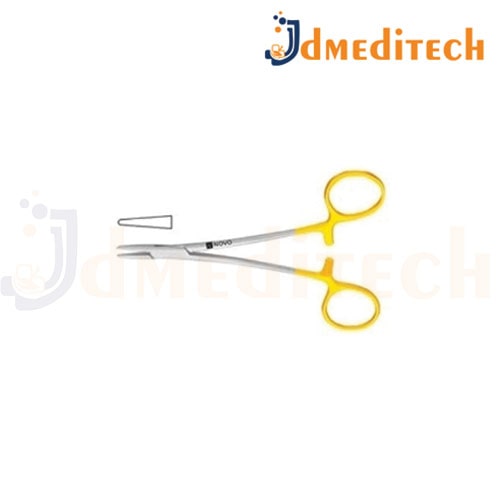
A Urethroplasty Needle Holder is a precision surgical instrument used during urethroplasty—a reconstructive procedure to repair the urethra, usually for treating urethral strictures or trauma. This tool helps securely grasp and guide surgical needles while placing delicate sutures in the narrow, sensitive urethral area.
Key Features
Fine Jaws – Designed with slim, smooth, or micro-serrated jaws for delicate needle control.
Length – Typically short to medium (15–18 cm) for close, precise work.
Locking Mechanism – Includes a ratchet lock to hold the needle in place during suturing.
Material – Made from surgical-grade stainless steel—rust-proof and autoclavable.
Ergonomic Grip – Designed for surgeon comfort and accuracy during long procedures.
Optional Tungsten Tips – Some models include tungsten carbide inserts for added durability and grip.
Primary Uses in Surgery
Procedure – Purpose of Needle Holder
Urethroplasty – Precise needle handling to suture the reconstructed urethral segment.
Urethral Stricture Repair – Used to suture mucosal layers while ensuring no additional trauma.
Hypospadias Repair – In pediatric urology, to suture fine urethral tissues with accuracy.
Bladder Neck Procedures – Assists in stitching the delicate lower urinary tract structures.
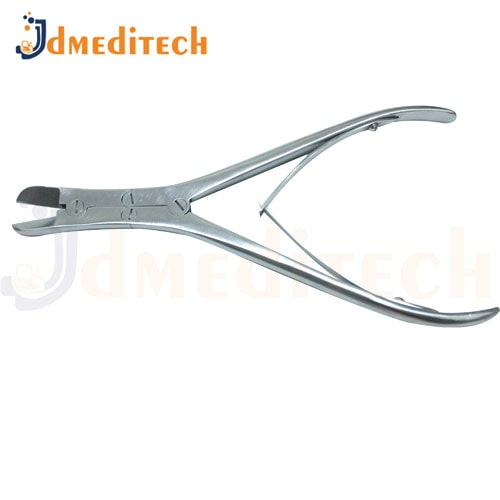
A Bone Cutter is a surgical instrument used to cut through bones during various types of surgeries. It is designed to make clean, strong cuts in hard bone tissue and is commonly used in orthopedic, trauma, dental, and veterinary procedures.
Key Features of a Bone Cutter
Function – Cuts through dense or hard bone in one swift motion.
Design – Scissor-like or plier-style handles with heavy-duty cutting jaws.
Types – Manual cutters (handheld)
– Powered cutters (electric/pneumatic).
Jaw Styles – Straight or angled jaws for easy access in different anatomical regions.
Material – Made of stainless steel – rustproof and autoclavable for reuse.
Grip and Control – Ergonomically designed for firm grip and reduced hand fatigue.
Size Options – Available in multiple sizes (e.g., 6″, 8″, 10″) based on surgical needs.
Common Surgical Uses
Orthopedic Surgery – Cutting through bones in joint replacements, fracture fixation.
Dental Surgery – Segmenting jawbone or extracting impacted teeth.
Neurosurgery – Removing skull bone flaps in craniotomies.
Veterinary Surgery – Bone surgeries in animals.
Amputations – Cleanly severing bone when removing limbs or fingers.
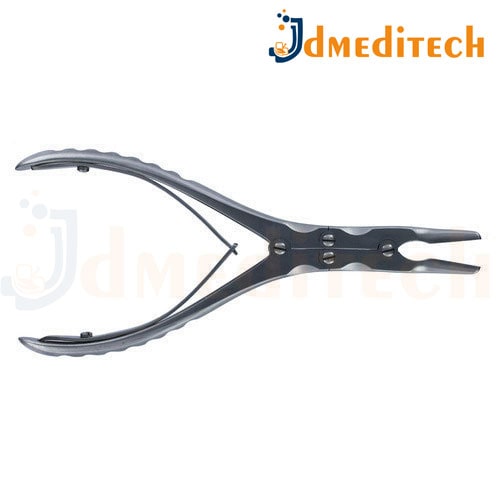
A Bone Nibbler is a surgical instrument used to cut, nibble, or trim small pieces of bone during operations. It is widely used in orthopedic, spinal, dental, and neurosurgery for precise bone removal and shaping.
Key Features of Bone Nibbler
Design – Scissor-like handles with strong, sharp jaws that “nibble” bone in small chunks.
Types – Available in Single Action and Double Action for different force needs.
Jaw Shape – Comes in straight or curved jaws to adapt to surgical site angles.
Material – Made of surgical-grade stainless steel – rust-resistant and autoclavable.
Size Variants – Offered in sizes like 190mm, 225mm, 270mm to suit different surgeries.
Cutting Precision – Ideal for controlled and gradual bone removal without splintering.
Grip – Ergonomic handles ensure firm grip and hand comfort during use.
Common Uses
Orthopedic surgery – Removing or reshaping bone edges during fracture treatment or joint reconstruction.
Spinal surgery – Trimming bone near the spinal cord for decompression.
Dental/Oral surgery – Bone removal during tooth extraction or implant placement.
Neurosurgery – Accessing cranial bones with precision in delicate brain surgeries.
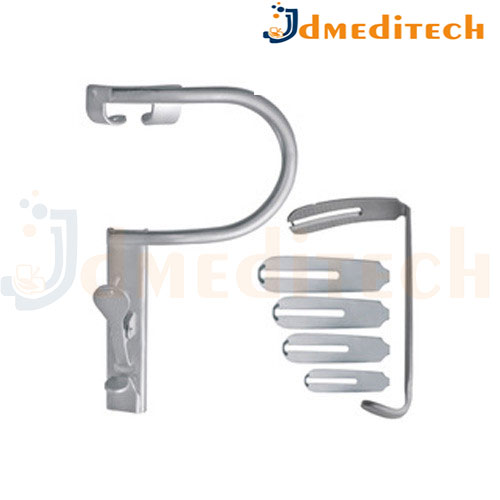
The Davis Boyle Mouth Gag with 5 Blades is a surgical instrument used to hold the mouth open during various medical procedures, primarily in oral and ENT surgeries.
Key Features:
Adjustable ratchet mechanism for easy and secure mouth opening
Comes with 5 interchangeable blades of different sizes to fit various patient anatomies
Made from high-quality stainless steel, ensuring durability and easy sterilization
Blades with smooth edges to minimize trauma to the oral cavity
Often used in tonsillectomies, oral surgeries, and dental procedures
Uses:
Keeps the mouth open during surgeries such as tonsillectomies, oral cavity surgeries, and dental procedures
Provides unobstructed access to the throat, mouth, and related structures for surgeons
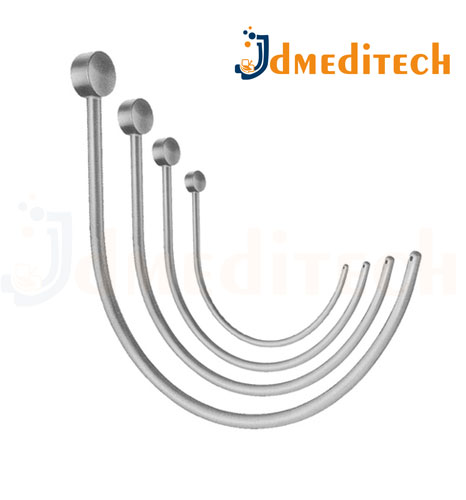
The Hey Groove Dilator Set is a set of surgical instruments used for progressive dilation of the male urethra, typically in procedures to treat urethral strictures (narrowing of the urethra).
Key Features:
Set includes multiple dilators of increasing diameters
Each dilator has a curved groove or grooved shaft to follow the urethral path smoothly
Made of high-grade stainless steel for durability and sterilization
Ergonomic handles for controlled, steady insertion
Designed to minimize trauma and discomfort during dilation
Uses:
Gradual enlargement of urethral strictures
Prepares the urethra for catheterization or endoscopic access
Commonly used in urology procedures and outpatient clinics