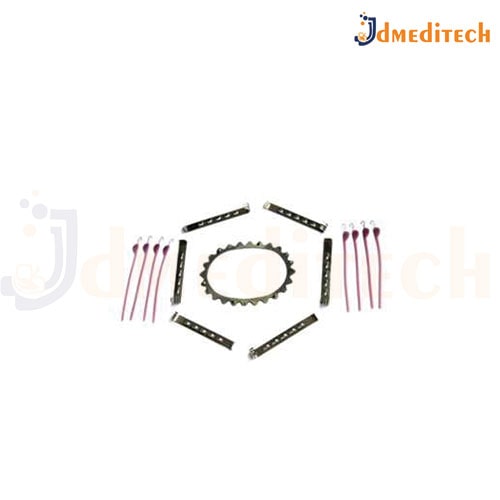
The Turner Warwick Ring Retractor Set is a surgical retractor system primarily used in urological and pelvic surgeries, especially urethroplasty. It provides wide, stable, and adjustable exposure of deep surgical fields without the need for manual tissue retraction.
Key Features
Stainless Steel Ring Frame
Rigid structure, usually oval-shaped.
Acts as the anchor for all the retractor components.
Adjustable Retractor Blades
Multiple blades of different lengths and curvatures.
Designed for retracting skin, muscles, and other tissues.
Locking Mechanism
Allows blades to be locked in place at specific angles or tension.
Helps maintain consistent retraction without manual holding.
360° Access
Ring shape allows for attachment of blades in multiple directions.
Offers full exposure from all sides of the incision.
Hands-Free Operation
Once set up, the retractor system stays in place, freeing the surgeon’s hands.
Reusable & Sterilizable
Made from surgical-grade materials for repeated use.
Use In:
Urethroplasty
Perineal prostatectomy
Urogenital surgeries
Pelvic floor repairs
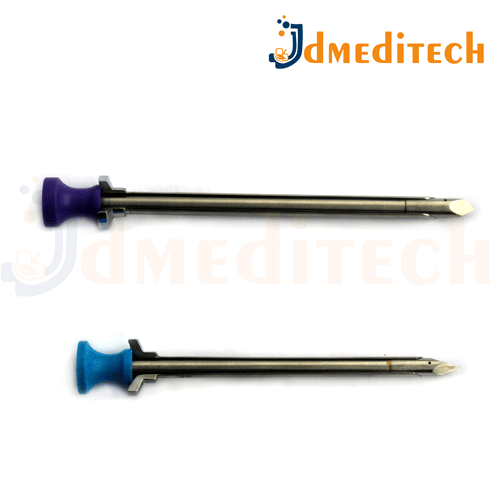
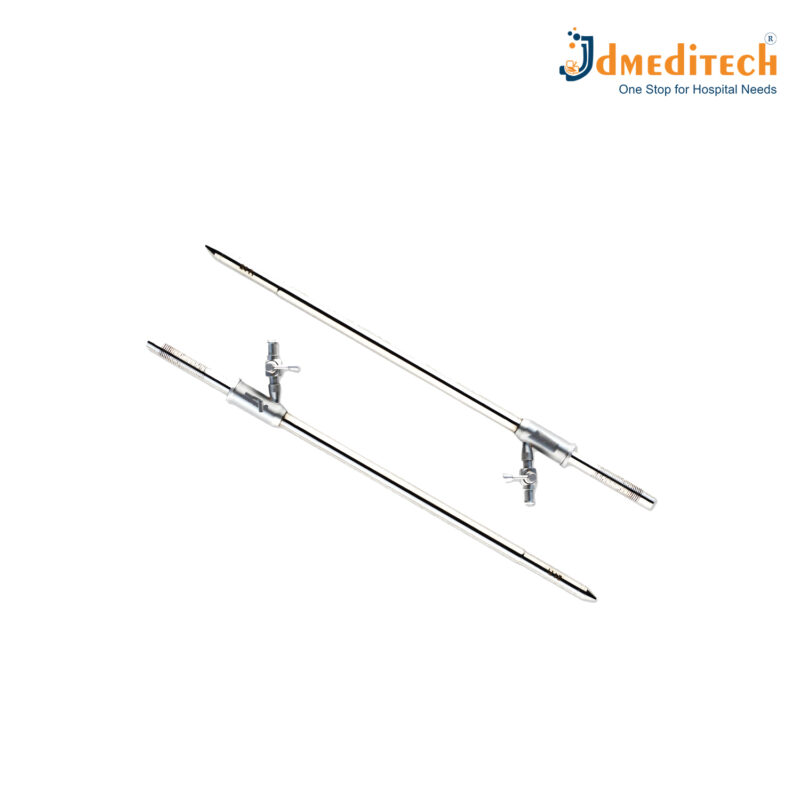
An SPC Trocar (Suprapubic Catheter Trocar) is a surgical instrument used to insert a suprapubic catheter into the bladder through the lower abdominal wall.
Features:
Includes a sharp metal trocar (stylet) and an outer cannula
Designed for one-step insertion
Typically made of stainless steel or medical-grade plastic
Available in various sizes (commonly 14–22 Fr)
Uses:
Used to perform suprapubic cystostomy for bladder drainage
Commonly used when urethral catheterization is not possible
Often seen in urology, emergency, and postoperative care
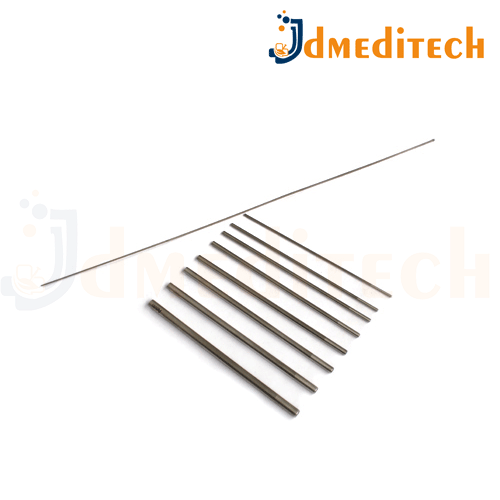
An Alkine Dilator Set is a medical instrument set used for gradual dilation of the urethra or other narrow passages, often in urological procedures.
Features:
Includes multiple dilators of increasing sizes
Made from high-grade stainless steel or Teflon
Smooth, tapered tips for atraumatic insertion
Designed for controlled, step-by-step dilation
Uses:
Used to dilate urethral strictures or prepare passages for endoscopic instruments
Helps in treating urethral narrowing and post-surgical scarring
Common in urology and reconstructive procedures
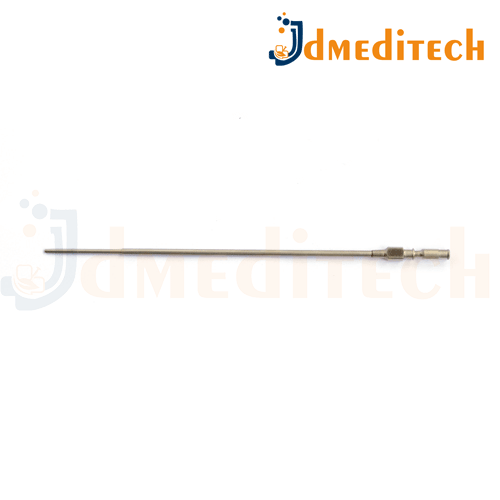
An Alkine Cannula is a surgical suction cannula used primarily in ENT (Ear, Nose, Throat) surgeries for precise suctioning of fluids or debris.
Features:
Fine, angled tip for targeted suction
Made of stainless steel
Available in different diameters
Ergonomic handle for control during microsurgery
Uses:
Common in ear surgeries (e.g., mastoidectomy)
Helps clear surgical fields for better visibility
Suitable for microscopic and delicate procedures
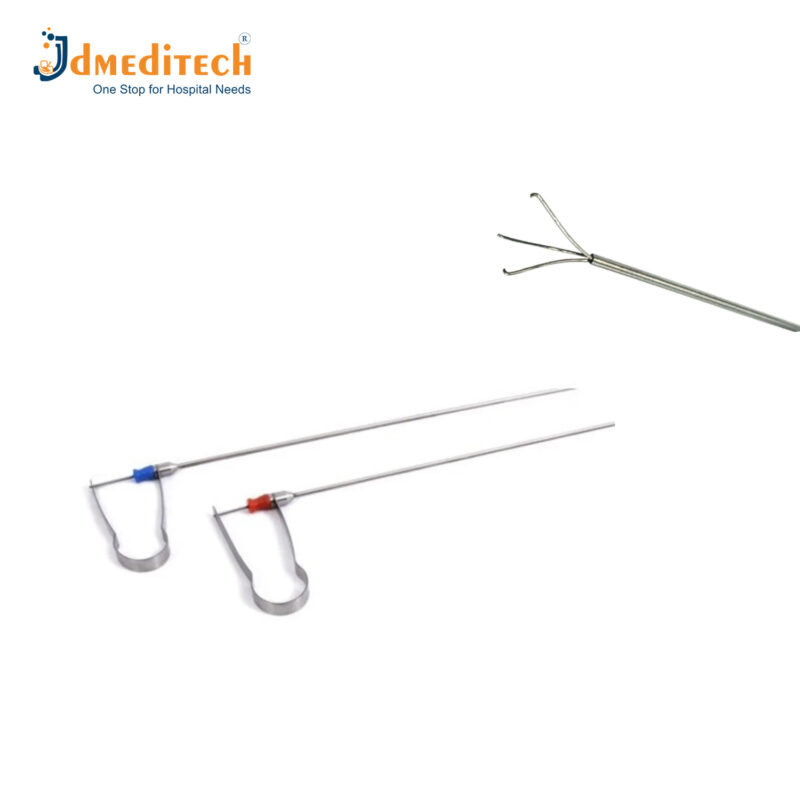
PCNL Triprong Forceps is a specialized surgical instrument used in Percutaneous Nephrolithotomy (PCNL) to grasp and extract kidney stones from the renal collecting system. It has a three-pronged (triprong) tip that opens and closes to securely hold stones of various sizes and shapes, especially small or hard-to-grip fragments.
This tool is essential in ensuring complete stone removal with precision and control during PCNL procedures.
Key Features of PCNL Triprong Forceps:
Three-Prong Jaw Design Offers firm and multi-point grip for secure stone handling.
Ergonomic Handle Ensures comfortable and precise control for the surgeon.
Stainless Steel Material Made from medical-grade stainless steel for durability and strength.
Autoclavable & Reusable Designed for multiple uses after sterilization.
Available in Multiple Sizes Comes in various lengths and prong diameters for surgical versatility.
Smooth Opening Mechanism Enables easy and controlled operation during the procedure.
Clinical Use:
Commonly used in PCNL surgeries to retrieve loose or mobile kidney stones.
Ideal for difficult-to-hold or irregularly shaped stones.
Enhances surgical efficiency by ensuring quick and safe stone extraction.
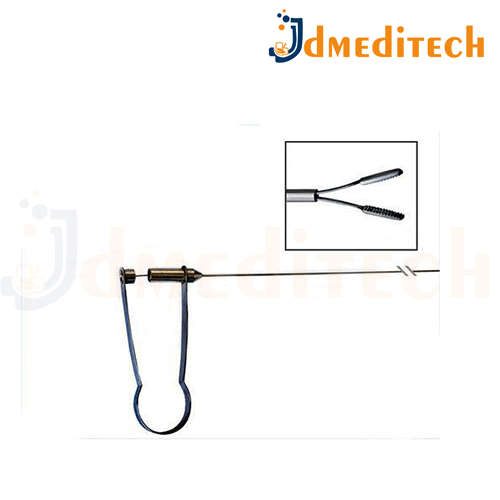
PCNL Peanut Jaw Forceps are specialized surgical instruments used during Percutaneous Nephrolithotomy (PCNL) procedures to remove or grasp kidney stones and tissue fragments.
Available Size:
1) 6 FR x 360mm
2) 9 FR x 360mm
3) 12 FR x 360mm
4) Customize Also Available.
Features:
Peanut-shaped jaw for secure and delicate grasping
Fine tips to prevent tissue damage
Made from stainless steel or titanium for durability
Flexible shaft for easy navigation through small access tracts
Small jaw design allows access to tight spaces in the kidney
Uses:
Stone removal during PCNL procedures
Grasp and remove small fragments or stone debris
Effective for precise extraction in tight or delicate areas
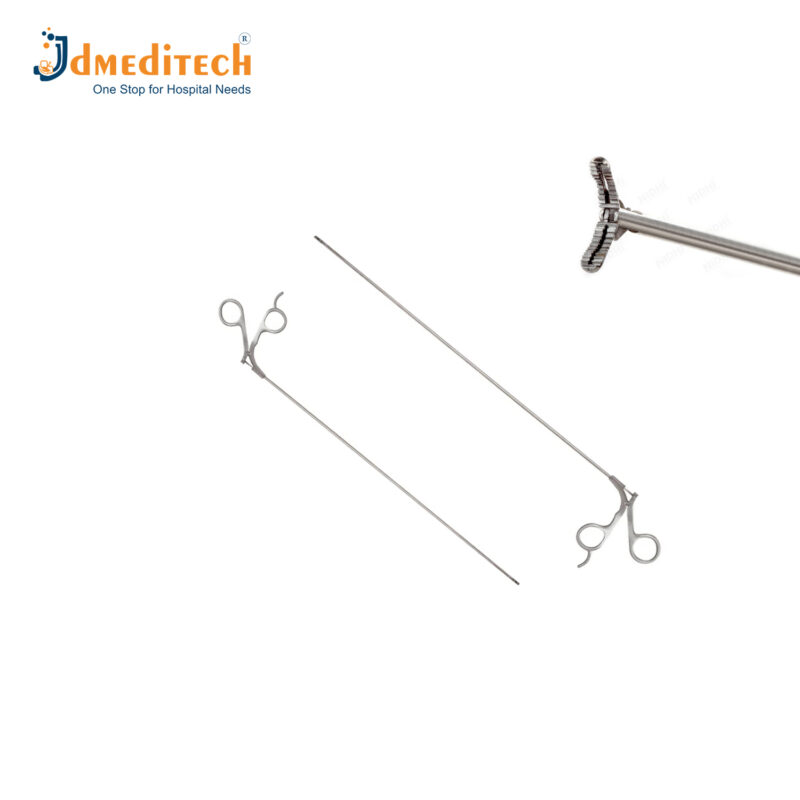
The PCNL Flat Jaw U-Handle Forceps are specialized surgical instruments used during Percutaneous Nephrolithotomy (PCNL) procedures to grasp, fragment, or remove kidney stones.
Size:
6 FR x 360mm
9 FR x 360mm
12 FR x 360mm
Key Features:
Flat jaws for efficient grasping and manipulation of stones
U-shaped handle for a secure, ergonomic grip
Stainless steel construction for durability and easy sterilization
Radiopaque tip for visibility under X-ray or fluoroscopy
Precise and controlled action for delicate stone removal
Variety of jaw sizes for different stone types and kidney anatomy
Uses:
Grasp and remove kidney stones during PCNL procedures
Assist in stone fragmentation when combined with other instruments like lasers
Used in minimally invasive surgeries for effective stone removal with minimal trauma
Navigate through the operative sheath to safely extract stones from the renal pelvis
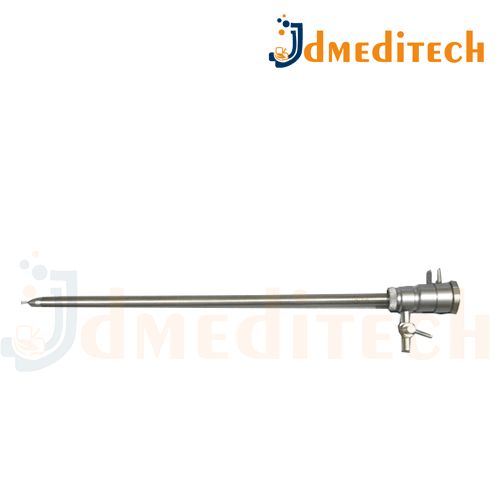
A PCNL Operative Sheath is a specialized medical device used in Percutaneous Nephrolithotomy (PCNL) procedures. It acts as a protective access channel that connects the skin surface to the kidney, allowing the safe insertion of instruments like nephroscopes, stone graspers, and suction devices during kidney stone removal surgeries.
This sheath helps maintain a stable surgical tract, protects surrounding tissues, and enables smooth instrument passage with effective irrigation.
Key Features of PCNL Operative Sheath:
Available in Multiple Sizes – Comes in various sizes (e.g., 24Fr to 30Fr) to suit different patient anatomies.
Reusable or Disposable – Offered in autoclavable stainless steel and single-use polymer options.
Supports Continuous Irrigation – Allows fluid flow to maintain a clear surgical field.
Radiopaque Markings – Enhances accuracy under fluoroscopic guidance.
Smooth Inner Surface – Facilitates easy insertion and removal of surgical instruments.
Robust Construction – Made from medical-grade materials for strength, precision, and safety.
Clinical Use:
Used during PCNL procedures to maintain access to the kidney.
Facilitates stone fragmentation and removal.
Helps reduce operative time and tissue damage.
A MINI PCNL Sheath is a small, specialized tube used in Percutaneous Nephrolithotomy (PCNL) to provide access to the kidney for stone removal through a small incision, designed for minimal invasive procedures.
Key Features:
Small diameter (typically 12–15 Fr) for less invasive kidney access
Flexible or rigid options to accommodate the nephroscope and instruments
Durable material (usually stainless steel or medical-grade polymer)
Smooth surface for easier insertion and reduced trauma
Radiopaque tip for visibility under imaging
Working channel for passing instruments like lasers, baskets, or stone retrieval tools
Uses:
Access to the kidney for stone removal in MINI PCNL procedures
Provides a safe pathway for nephroscopes and other instruments
Minimizes incision size and post-operative recovery time
Used in smaller or more complex renal stones where a traditional nephroscope would be too large
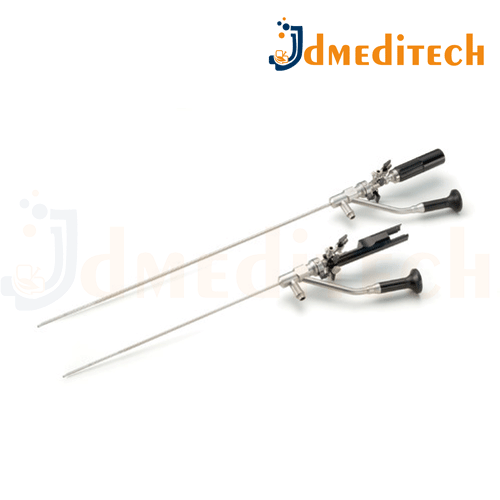
A MINI PCNL Nephroscope is a miniature, rigid endoscopic instrument used in Percutaneous Nephrolithotomy (PCNL) to remove kidney stones through a small incision.
Key Features:
Smaller diameter (typically 12–15 Fr) for less invasive procedures
Rigid shaft for stable and precise navigation
High-definition optics for clear kidney visualization
Working channel for passing instruments like lasers or stone baskets
Light source for better illumination
Radiopaque tip for visibility during fluoroscopy
Uses:
Remove kidney stones through percutaneous access with minimal trauma
Treat large or complex kidney stones in patients with smaller renal anatomy
Minimize post-operative discomfort and recovery time compared to traditional PCNL