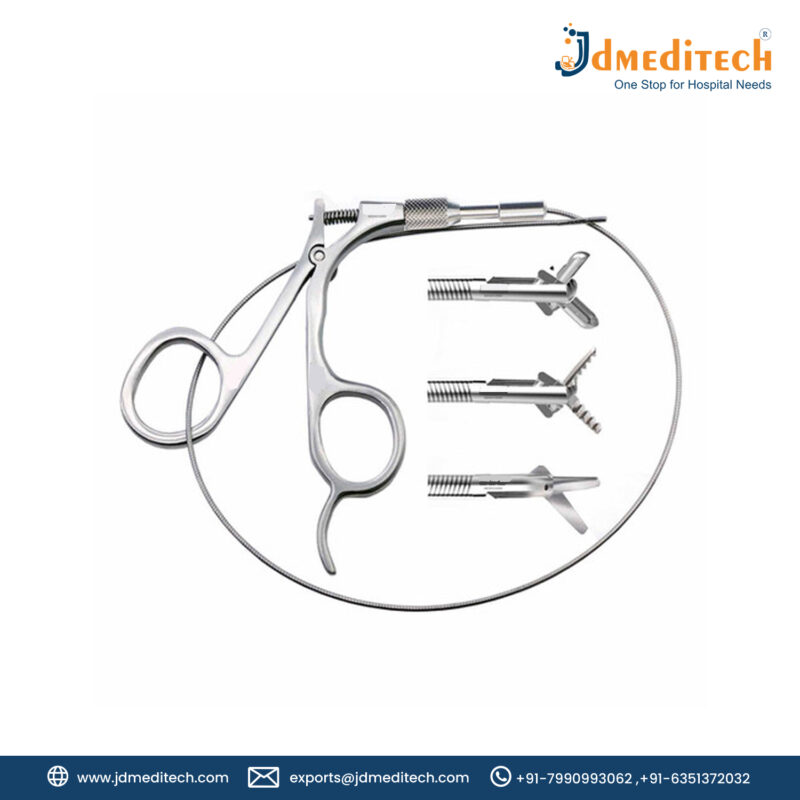
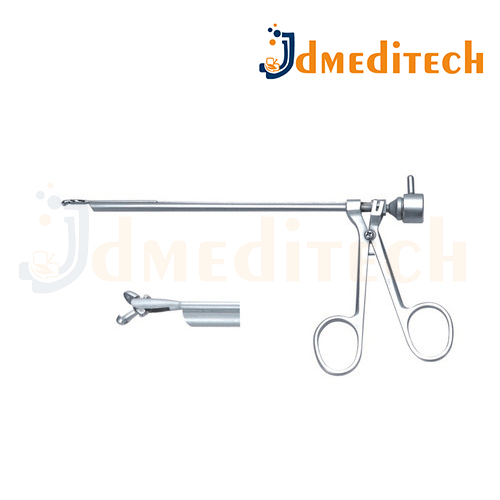
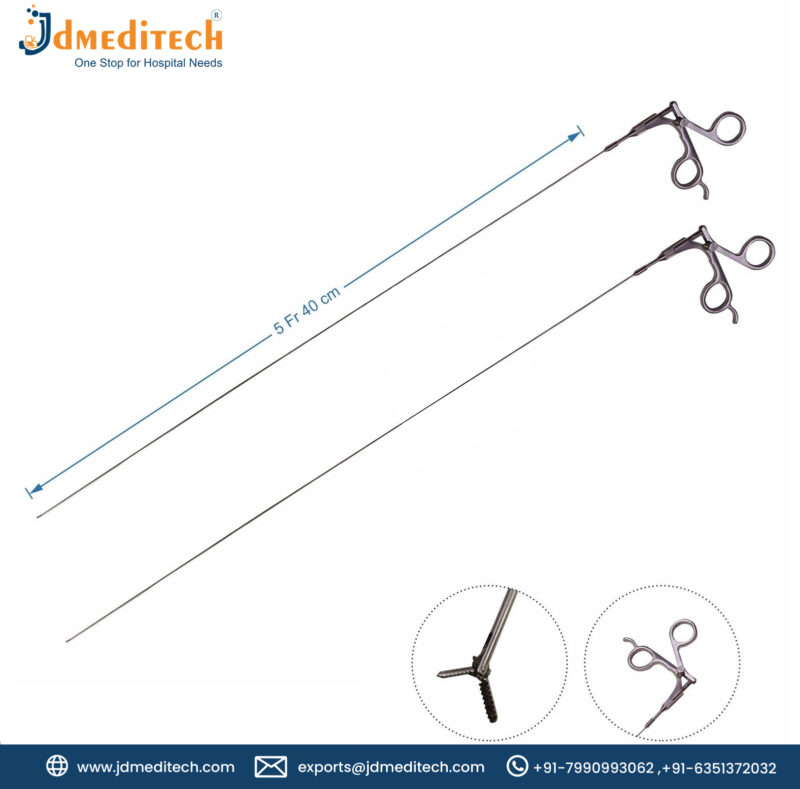
A Pediatric Cystoscopy Biopsy Forceps is a small, specialized tool used through a pediatric cystoscope to take tissue samples (biopsies) from the bladder or urethra in children.
Key Features:
Small diameter (fits 6–12 Fr cystoscopes)
Sharp, cup-shaped jaws for precise tissue cutting
Stainless steel, reusable or disposable
Ergonomic handle for controlled operation
Compatible with pediatric cystoscope channels
Uses:
Take bladder or urethral tissue samples for diagnosis
Help detect infections, tumors, or inflammation
Used during diagnostic pediatric cystoscopy
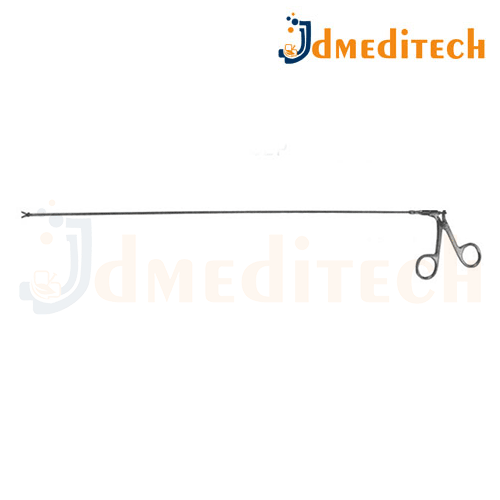
A Pediatric Cystoscopy Grasping Forceps is a small surgical tool used during pediatric cystoscopy to grasp or remove objects (like stones, tissue, or foreign bodies) from the bladder or urethra.
Key Features:
Small size (fits 6–12 Fr cystoscopes) for child anatomy
Delicate, precise jaws (rat-tooth, alligator, or cup-shaped)
Ergonomic handle for easy control
Made of stainless steel; reusable or disposable
Flexible or rigid depending on need
Uses:
Remove bladder stones or foreign objects
Assist in pediatric urological procedures
Grasp tissue for biopsy or manipulation
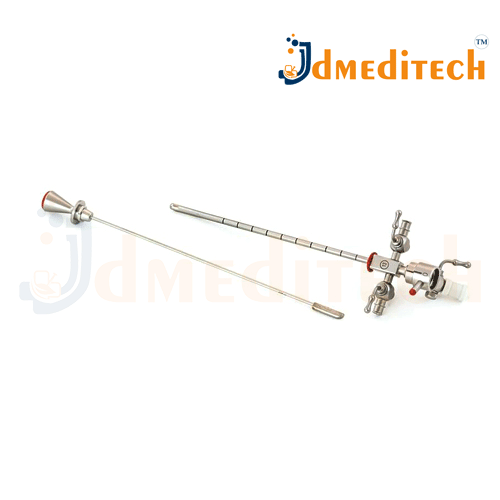
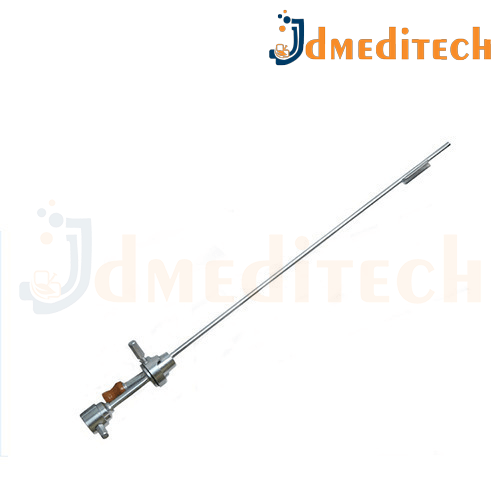
A Pediatric Cystoscope Sheath is a protective outer tube used during pediatric cystoscopy to safely introduce the cystoscope and other instruments into the urethra and bladder of children.
Key Features:
Small diameter (typically 6–12 Fr) for pediatric anatomy
Durable material (stainless steel or medical-grade polymer)
Smooth, rounded tip for safe insertion
Working channels for instruments like biopsy forceps or irrigation systems
Sterilizable or disposable options
Uses:
Protective conduit for cystoscope insertion in pediatric patients
Facilitates access for diagnostic and therapeutic procedures
Enables safe bladder and urethra examination in children
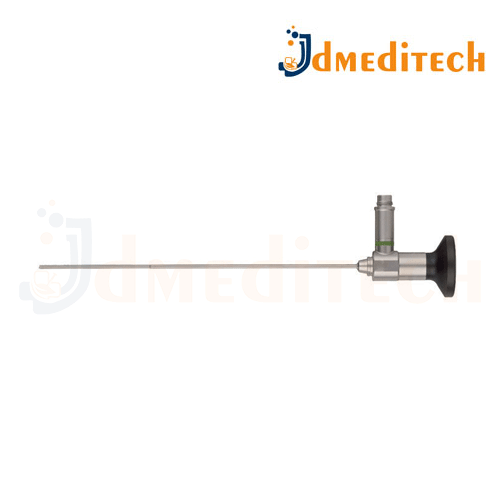
A Pediatric Cystoscope is a small, flexible endoscopic instrument used for visualizing the urethra and bladder in infants and children for diagnostic or therapeutic procedures.
Key Features:
Small diameter (usually 6–12 Fr) for pediatric anatomy
Flexible shaft for maneuvering through small, curved urethra
High-definition camera for clear visualization
Light source for proper illumination
Multiple working channels for tools (biopsy forceps, stents, etc.)
Autoclavable or disposable options
Uses:
Diagnose urinary tract issues (e.g., bladder abnormalities, infections, tumors)
Perform minor procedures like biopsy, stone removal, or stent placement
Monitor pediatric urological conditions (e.g., posterior urethral valves)
A Litho Bridge is a urological instrument used to assist in the removal or fragmentation of stones during endoscopic procedures like cystolitholapaxy or nephrolithotomy.
Key Features:
Bridge-like structure that allows safe passage of instruments
Designed to stabilize and guide stones for removal or fragmentation
Made from high-quality stainless steel
Flexible or rigid versions based on procedure needs
Uses:
Assists in stone fragmentation during endoscopic surgeries
Helps guide instruments (such as lithotripsy probes) to stone location
Minimizes trauma to surrounding tissue during stone management
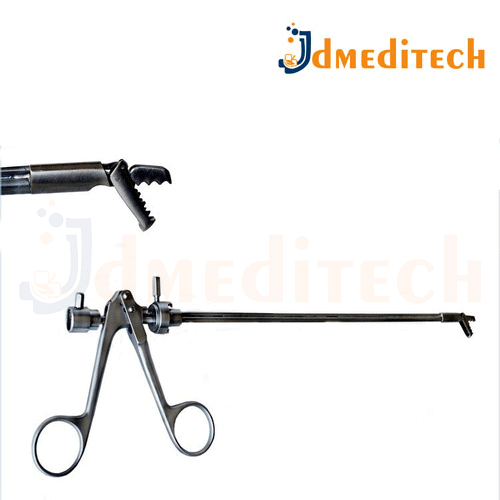
Stone Crushing Forceps are surgical tools used during cystoscopy or nephroscopy to mechanically crush urinary bladder or kidney stones.
Key Features:
Strong, serrated jaws for crushing stones
Long, narrow shaft fits through endoscope
Stainless steel, reusable and autoclavable
Ergonomic handle for firm grip and control
Uses:
Break and remove bladder or kidney stones
Used in cystolitholapaxy or PCNL procedures
Helps avoid open surgery by enabling endoscopic stone removal
Optical Biopsy Forceps are advanced endoscopic instruments that combine biopsy forceps with an integrated optical channel or telescope attachment, allowing the surgeon to directly visualize the biopsy site during tissue sampling. These are commonly used in urology, gastroenterology, and bronchoscopy procedures for precise and targeted biopsies.
Key Features of Optical Biopsy Forceps:
Integrated Optics:
Designed to hold a telescope or camera, offering direct vision of the biopsy area.
Precision Jaws:
Sharp, cup-shaped jaws for clean and accurate tissue extraction.
Real-Time Control:
Surgeons can see exactly where they are cutting, reducing the risk of missing lesions or causing unintended damage.
Rigid or Semi-Rigid Shaft:
Provides stability and control during the procedure.
Reusable Design:
Typically made of high-grade stainless steel, suitable for sterilization and multiple uses.
Applications:
Often used during cystoscopy or ureteroscopy for bladder, ureter, or prostate biopsies.
Optical biopsy forceps allow doctors to see and sample tissues simultaneously, increasing precision and reducing procedural risks.
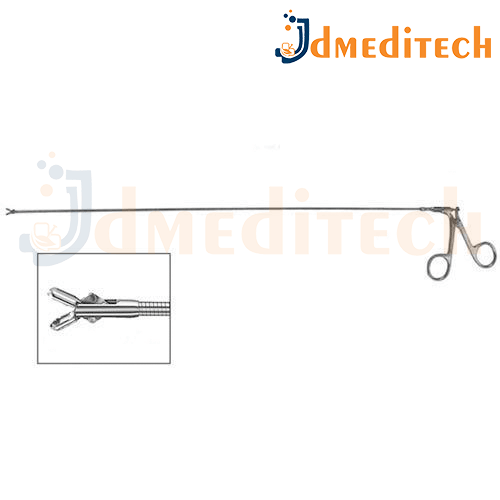
A Cystoscope Flexible Biopsy Forceps is a slender, flexible instrument used during flexible cystoscopy to take tissue biopsies from the bladder, urethra, or prostatic urethra. It passes through the working channel of a flexible cystoscope and enables minimally invasive sample collection under direct vision.
Key Features of Flexible Biopsy Forceps
Flexible Shaft – Allows easy passage through the curved channel of a flexible cystoscope.
Jaw Type – Equipped with small, sharp jaws that can open and close to grasp tissue.
Handle Control – Scissor-style or ring-handle for manual jaw actuation.
Material – Made from stainless steel or medical-grade alloys, ensuring durability and sterility.
Jaw Configuration – Available in cup, alligator, or toothed styles depending on tissue type and use.
Size Compatibility – Designed to fit the working channel of most flexible cystoscopes (commonly 5–7 Fr).
Reusable or Disposable – Available in both single-use disposable and autoclavable reusable types.
Common Uses in Urology
Bladder Biopsy – For suspected bladder tumors, inflammation, or carcinoma in situ.
Urethral Biopsy – For urethral lesions or strictures.
Follow-up in Cancer Patients – Routine surveillance biopsies in patients with urothelial carcinoma.
Tissue Sampling for Histopathology – In cases of hematuria, abnormal cystoscopy findings, or chronic bladder irritation.
Cystoscope Flexible Stent Removal Forceps are specialized endoscopic surgical instruments designed to grasp and remove ureteral stents through a flexible cystoscope. These forceps are thin, flexible, and precisely controlled, allowing urologists to retrieve stents from the bladder or ureter without open surgery.
Smooth Finish: To minimize damage to surrounding tissues.
Durable: Made to withstand the rigors of surgical procedures.
Measurement Accuracy: Designed for precise and efficient manipulation.
Anti-corrosive: Made from Medical Grade stainless steel material to resist corrosion.
High Performance: Designed for reliable and effective use to get Performance Satisfaction
Key Features:
Flexible Shaft: Designed to pass through the working channel of a flexible cystoscope, allowing smooth navigation.
Grasping Tip (Jaw): Fine, atraumatic jaws to securely hold and remove ureteral stents without damaging tissue.
Controlled Handle Mechanism: Ergonomic handle for precise opening/closing of the forceps tip.
High Compatibility: Compatible with most flexible cystoscopes (typically 5–8 Fr working channels).
Durable Material: Made from medical-grade stainless steel or high-quality polymers; available in reusable or disposable types.
Smooth Operation: Designed for smooth insertion and withdrawal with minimal patient discomfort
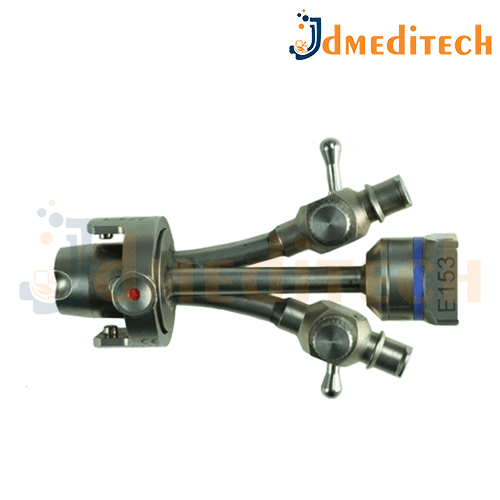
A cystoscope bridge is a key attachment used in cystoscopy procedures that connects the endoscopic telescope (camera or lens) to the sheath of the cystoscope. It acts as a support structure and provides channels for inserting surgical instruments into the bladder or urethra during urological procedures.
Features of a Cystoscope Bridge:
Instrument Channels:
Available in single or double channel versions for inserting tools like forceps, scissors, or biopsy devices.
Telescope Mounting:
Securely holds the telescope for a stable and clear visual during the procedure.
Leak-Proof Construction:
Maintains a sealed environment to allow effective irrigation without fluid leakage.
Durable & Sterilizable:
Made from stainless steel or medical-grade materials; fully autoclavable for reuse.
Universal Compatibility:
Compatible with various cystoscope sizes and brands.
Rotatable/Fixed Types:
Some models offer rotatable heads for better angulation and handling during surgery.