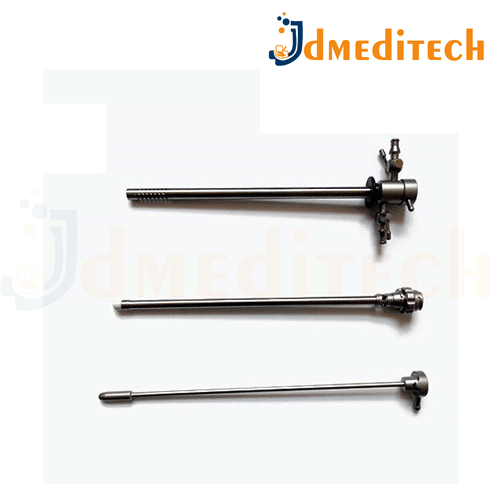
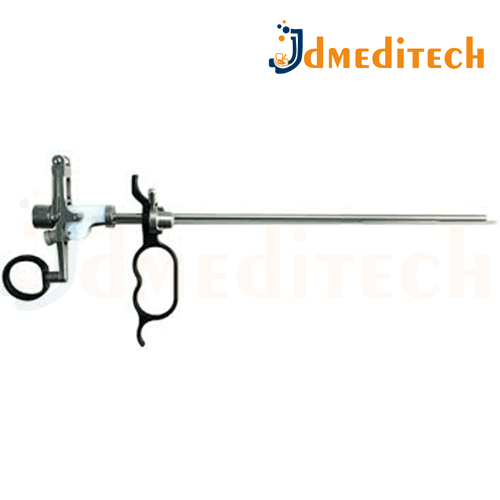
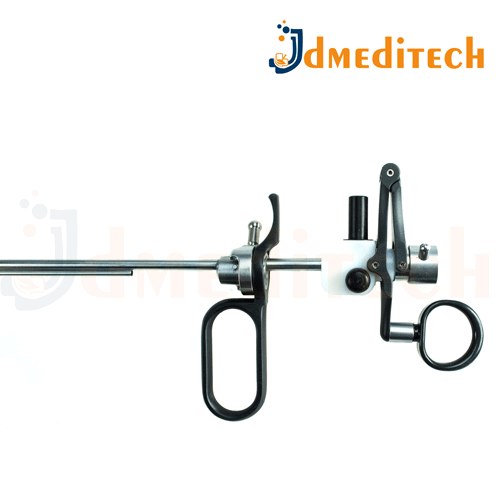
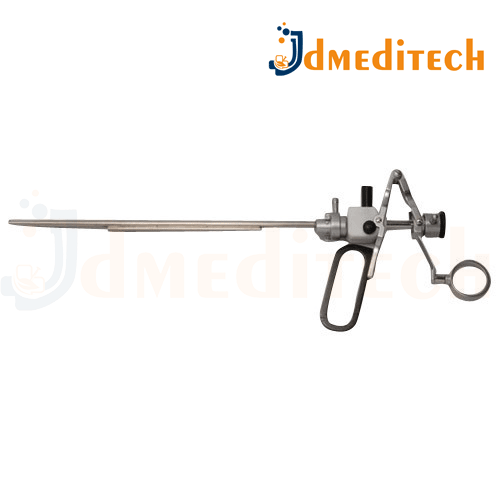
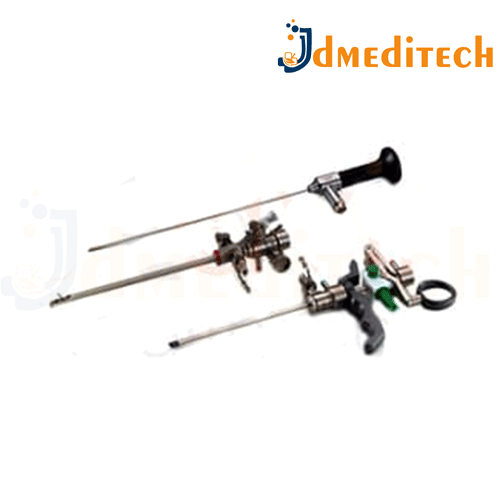
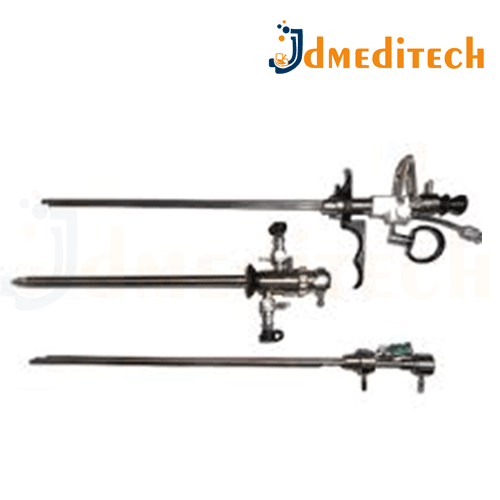
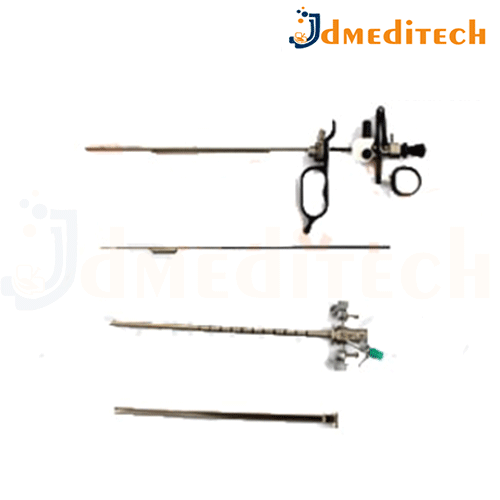
A TURP Resectoscope Sheath is a tubular surgical instrument used during Transurethral Resection of the Prostate (TURP) procedures. It allows insertion of the resectoscope into the urethra while providing irrigation and working channels.
Features:
Made of high-grade stainless steel or medical alloys
Has dual channels for continuous irrigation and instrument passage
Compatible with monopolar or bipolar working elements
Sizes typically range from 24 Fr to 28 Fr
May have rotatable and insulated options
Uses:
Enables safe and controlled resection of prostate tissue
Maintains clear visibility with continuous fluid irrigation
Used in treatment of BPH (Benign Prostatic Hyperplasia)
A Laser Working Element is a specialized attachment used with a resectoscope or endoscope to deliver laser energy during urological surgeries, such as stone fragmentation or prostate enucleation.
Key Features:
Holds and guides laser fibers accurately during procedures
Compatible with various lasers (Holmium, Thulium, etc.)
Precise control mechanism for targeting tissue or stones
Insulated and durable for safety and repeated use
Allows simultaneous irrigation and visualization
Uses:
Used in laser lithotripsy (stone breaking) and HoLEP (prostate enucleation)
Provides controlled laser delivery through endoscopic instruments
Ensures safe, effective, and minimally invasive tissue ablation or stone removal
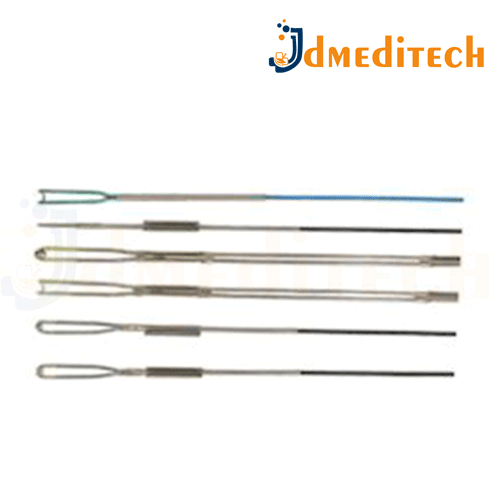
A Bipolar Working Element is a key instrument used in endoscopic surgeries, especially in urology (like TURP – Transurethral Resection of the Prostate and TURBT – Bladder Tumor Resection). It is part of a bipolar resectoscope system and is used to cut and coagulate tissue using bipolar electrical energy.
Key Features:
Bipolar Energy System – Current flows between two electrodes on the instrument—no grounding pad needed.
Saline Irrigation Use – Safe to use with normal saline, which reduces the risk of electrolyte imbalance.
Active or Passive Type – vailable in spring-loaded (active) or manually controlled (passive) types.
Precise Motion Control – Allows smooth forward and backward movement of the electrode loop.
Compatible Design – Connects with a bipolar electrosurgical unit and telescope.
Reusable or Disposable – Offered in both forms, depending on hospital preference and budget.
Better Coagulation – Provides controlled cutting with reduced bleeding.
Common Uses:
TURP: For removing excess prostate tissue in cases of benign prostatic hyperplasia (BPH).
TURBT: For resection of bladder tumors.
Gynecological surgeries: Like endometrial ablation.
Advantages Over Monopolar Working Element:
Lower risk of TUR syndrome (no non-conductive fluids needed)
Better hemostasis (bleeding control)
More precise and safer in high-risk patients
A Monopolar Working Element is a key component of a monopolar TURP (Transurethral Resection of the Prostate) resectoscope, responsible for holding and activating the electrode that resects prostate tissue.
Features:
Connects to monopolar electrosurgical unit (ESU)
Supports loop electrodes for cutting/coagulating
Enables controlled movement of the electrode
Works with non-conductive irrigation fluids (like glycine)
Made from durable, insulated material for patient safety
Uses:
Used in TURP surgeries for resecting enlarged prostate tissue
Allows cutting and coagulation through monopolar energy delivery
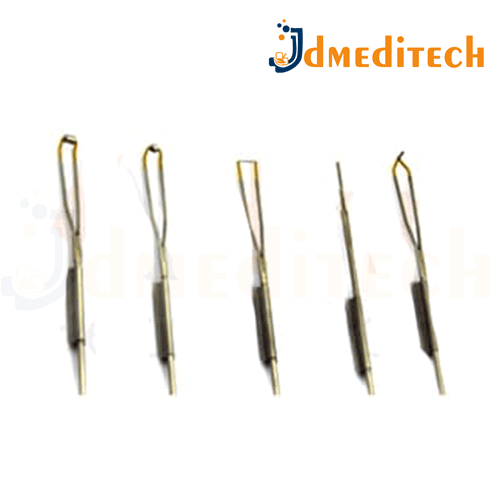
A Pediatric TURP Loop is a specialized electrosurgical loop designed for use in pediatric patients during Transurethral Resection of the Prostate (TURP) or similar procedures for prostate and bladder surgery.
Features:
Smaller size to suit pediatric anatomy
Made from high-quality materials (usually stainless steel or nitinol)
Monopolar energy for cutting and coagulation
Flexible loop design for precise tissue resection
Compatible with pediatric resectoscope systems
Uses:
Used in TURP surgeries for treating benign prostatic hyperplasia (BPH) or other prostate-related issues in pediatric patients
Ideal for cutting and coagulating small tissue masses in the prostate or bladder
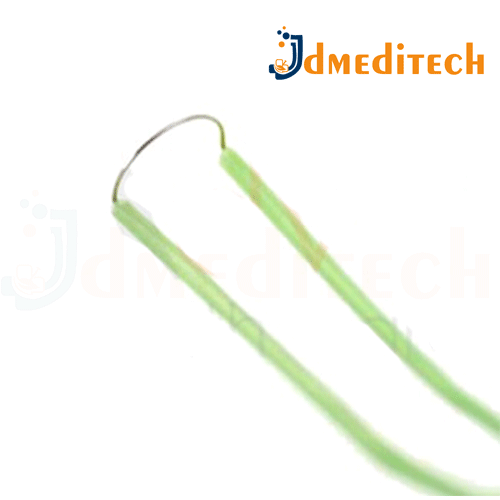
A Monopolar TURP Loop is a surgical instrument used in Transurethral Resection of the Prostate (TURP), where a single active electrode is used to cut and coagulate prostate tissue with monopolar electrosurgery.
Key Features:
Single active electrode for cutting and coagulating tissue
Loop-shaped design for effective tissue resection
Durable, heat-resistant material for safe and repeated use
Requires a saline or irrigation solution for current conduction
Flexible shaft for maneuverability within the urethra
Uses:
Remove excess prostate tissue in patients with Benign Prostatic Hyperplasia (BPH)
Resect prostate tissue via the urethra without external incisions
Minimally invasive surgery for faster recovery and reduced risk compared to traditional prostate surgery
A Bipolar TURP Loop is a surgical instrument used in Transurethral Resection of the Prostate (TURP), where two electrodes are used to cut and coagulate prostate tissue using bipolar electrosurgery, reducing the risk of complications.
Key Features:
Two active electrodes (one at the loop and one at the shaft) for safer current flow
Loop-shaped design for efficient tissue removal
Requires saline or irrigation solution for energy conduction
Reduced risk of bleeding compared to monopolar systems
Compatible with bipolar resectoscopes for precise control
Uses:
Resect prostate tissue for patients with Benign Prostatic Hyperplasia (BPH)
Minimally invasive procedure with lower risk of bleeding
Preferred for use in high-risk patients or those on anticoagulant therapy
A Pediatric Urethrotome Set is a set of specialized surgical instruments used for performing urethrotomy (incision of the urethra) in pediatric patients, typically for treating urethral strictures or narrowing.
Key Features:
Precision blades for controlled incision of the urethra
Small size suitable for pediatric anatomy
Adjustable depth mechanism to prevent excessive cutting
Ergonomically designed handle for precise control
Sterile, single-use or reusable instruments
Typically includes a urethrotome and dilator set for safe dilation
Uses:
Incise urethral strictures in children
Minimally invasive procedure to restore normal urine flow
Commonly used in pediatric urology for diagnostic and therapeutic urethrotomy
A Pediatric TURP (Transurethral Resection of the Prostate) Resectoscope Set is a specialized instrument set used for performing minimally invasive prostate surgeries in pediatric patients. It is designed for delicate procedures involving the resection of prostate tissue or bladder outlet obstructions in children.
Features:
Smaller Design: Instruments tailored for pediatric anatomy.
Resectoscope: Flexible tube with a camera, light, and electrode loop for tissue resection.
Electrosurgical Unit: Powers the electrode loop for cutting and coagulating tissue.
Irrigation System: Keeps the surgical area clear for better visualization.
Small Electrodes: For precise cutting in delicate pediatric tissues.
Adjustable Shaft: Offers flexibility to navigate smaller anatomical structures.
Use in:
Bladder Outlet Obstruction: Due to conditions like congenital prostate enlargement.
Prostatic Abnormalities: To remove obstructive tissue causing urinary issues.
Recurrent UTIs: Caused by prostate enlargement leading to urinary retention.
An Optical Urethrotomy Set is a collection of surgical instruments used for performing an optical urethrotomy procedure, which involves cutting or dilating the urethra under visual guidance to treat urethral strictures or blockages.
Key Features:
Includes an optical urethrotome with an integrated light source for clear visualization
Fiber-optic system for enhanced illumination of the urethra
Precise cutting blades or electrodes for controlled incision or coagulation
Flexible or rigid urethrotomes to suit the anatomy of the patient
Sterile and reusable components for repeated use
Uses:
Incise and widen narrowed sections of the urethra caused by strictures or scarring
Used in urological procedures for both diagnostic and therapeutic purposes
Visual guidance improves precision and reduces the risk of injury to surrounding tissues
Typically used in both male and female patients with urethral blockages