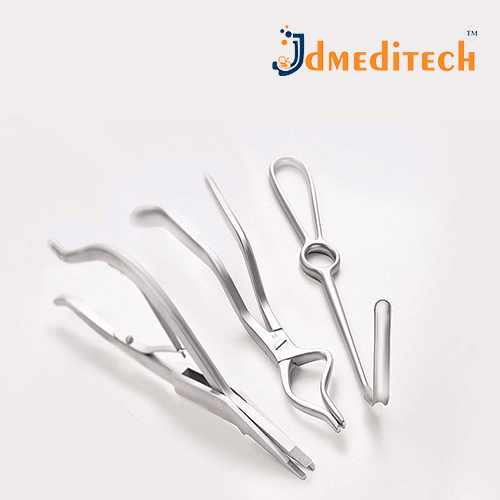
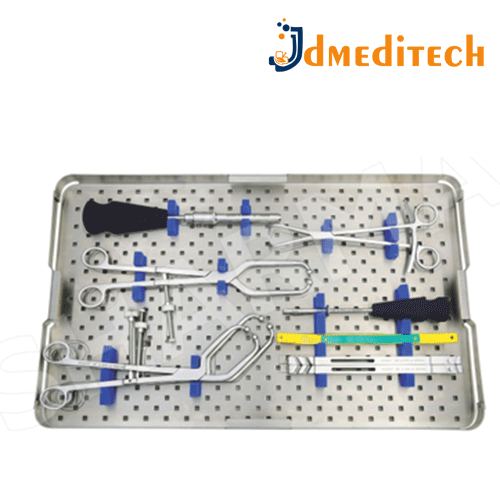
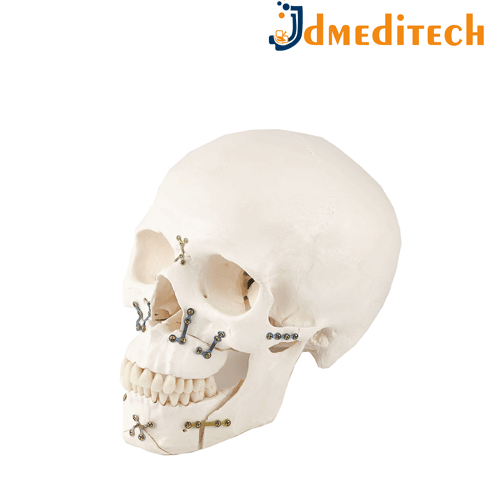
A Craniomaxillofacial Instrument Set is a specialized surgical kit used in craniofacial and maxillofacial surgeries, including procedures on the skull, face, and jaw.
Features:
Bone plates and screws
Mini screwdrivers and torque limiters
Periosteal elevators
Bone cutters, rongeurs, and scissors
Retractors and forceps
Made from surgical-grade stainless steel
Often comes in a custom tray for organization and sterilization
Designed for fine, delicate work in small, complex anatomical areas
Used in:
Facial trauma (fractures)
Reconstructive surgery
Orthognathic (jaw alignment) surgery
Tumor resections and congenital defect corrections
A Trauma Instrument Set is a comprehensive collection of surgical tools designed specifically for managing orthopedic trauma cases, such as fractures, dislocations, and bone injuries.
Features:
Bone reduction forceps
Periosteal elevators
Bone holders and retractors
Screwdrivers and depth gauges
Drill guides and bone cutting instruments
Made from high-quality surgical-grade stainless steel
Sterilizable and reusable
Organized in a sterilization tray or box
Uses:
Used in open reduction and internal fixation (ORIF) surgeries
Assists in aligning, holding, cutting, and fixing bones
Common in orthopedic trauma centers and emergency surgeries
Craniomaxillofacial (CMF) implants are specialized medical devices used to repair, reconstruct, or support the bones of the skull (cranium), face (maxilla), and jaw.
Features:
Made from biocompatible materials like titanium or PEEK
Include plates, screws, meshes, and orbital implants
Contoured to match facial anatomy
Radiolucent or MRI-compatible options available
Uses:
Trauma repair (facial fractures, skull fractures)
Tumor resection reconstruction
Congenital deformity correction
Orthognathic (jaw) surgery
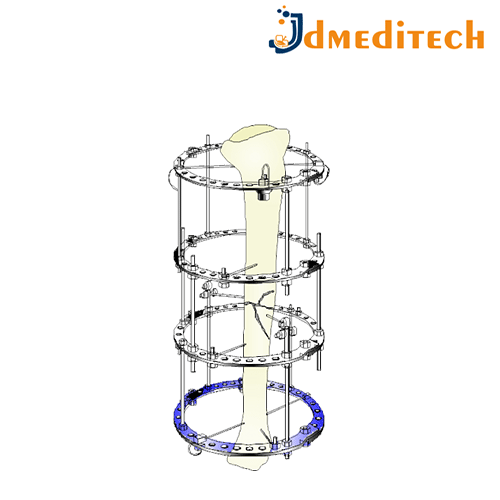
External fixators are orthopedic devices used to stabilize bone fractures from outside the body. They consist of pins or screws inserted into the bone and connected by external rods or frames to hold the bone in the correct position during healing.
Features:
Adjustable frame system
Stainless steel, aluminum, or carbon fiber materials
Allows access to soft tissues for wound care
Can be monolateral or circular (like Ilizarov frame)
Uses:
Open fractures with soft tissue injury
Bone lengthening or deformity correction
Temporary stabilization in polytrauma or infection
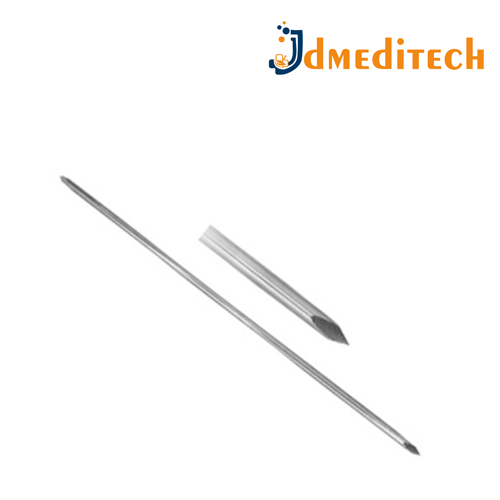
Orthopedic wires and pins are metallic surgical devices used to fix, align, and stabilize fractured bones or bone fragments during healing.
Key Types:
Kirschner wires (K-wires): Thin wires used for temporary or permanent fixation
Steinmann pins: Thicker, stronger pins for larger bone stabilization
Cerclage wires: Used to wrap around fractured bone segments
Uses:
Fracture fixation (especially in small bones like fingers, wrists)
Temporary stabilization during surgery
Pediatric orthopedic procedures
Support in external or internal fixation systems
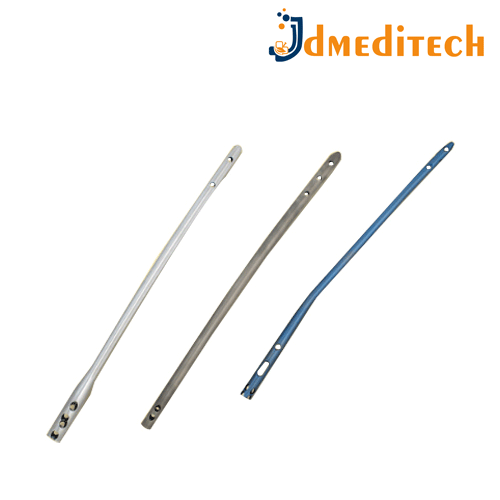
Interlocking nails are long, metal rods inserted into the medullary cavity of long bones (like femur, tibia, or humerus) to stabilize fractures. They are “locked” with screws at both ends to prevent rotation and shortening of the bone.
Features:
Made of stainless steel or titanium
Available in various lengths and diameters
Holes at both ends for interlocking screws
Can be solid or cannulated (hollow)
Uses:
Stabilizing complex long bone fractures
Treating diaphyseal and some metaphyseal fractures
Used in trauma and orthopedic surgery for faster healing and weight-bearing
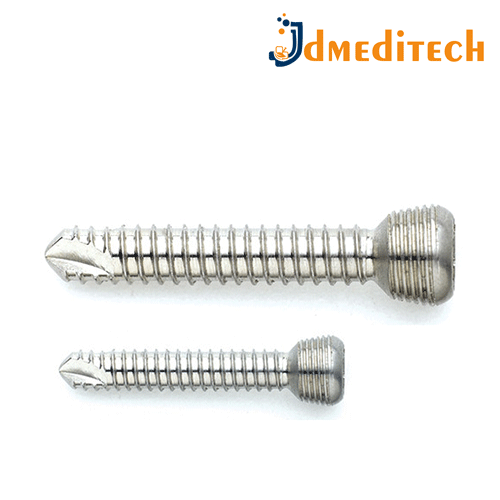
A locking screw is a type of orthopedic screw used in conjunction with locking plates to stabilize fractured bones. Unlike conventional screws, it locks into the plate, creating a fixed-angle construct.
Features:
Threaded head that locks into the plate hole
Typically made from stainless steel or titanium
Available in different lengths and diameters
Uses:
Common in osteoporotic bone fractures
Provides strong fixation in complex or multi-fragment fractures
Used in trauma, orthopedic, and reconstructive surgeries
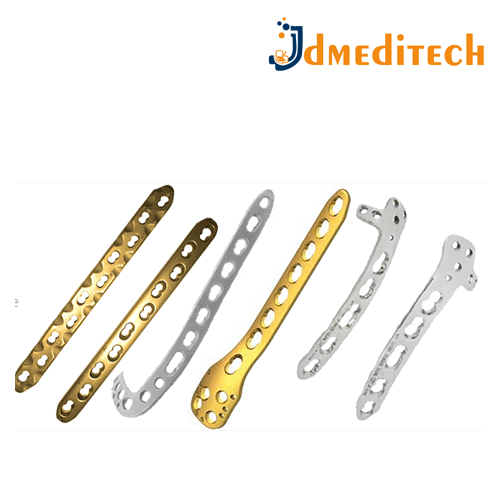
Locking plates are specialized orthopedic implants used to stabilize broken bones. Unlike traditional bone plates, they use locking screws that thread into the plate itself, creating a fixed-angle construct for added stability.
Features:
Screws “lock” into the plate holes
Made from biocompatible metals like titanium or stainless steel
Available in anatomical shapes for various bones (e.g., femur, humerus)
Uses:
Fractures in osteoporotic or weak bones
Complex fractures where traditional plating may not hold well
Periarticular fractures near joints
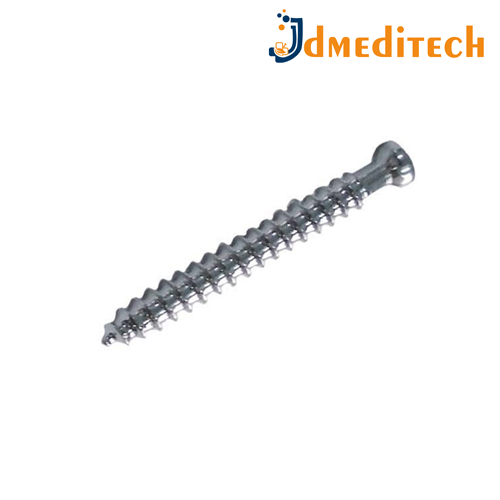
A bone screw is a medical device used in orthopedic surgery to fixate bone fragments or secure implants (like plates or rods) to the bone. It provides stability and compression at the fracture site, aiding proper healing.
Features:
Made of stainless steel or titanium (biocompatible)
Available in various types: cortical, cancellous, locking, and cannulated screws
Designed with sharp threads for strong grip in bone
Uses:
Holding bone fragments together after a fracture
Fixing orthopedic implants (e.g., plates, rods)
Stabilizing joints or bone grafts
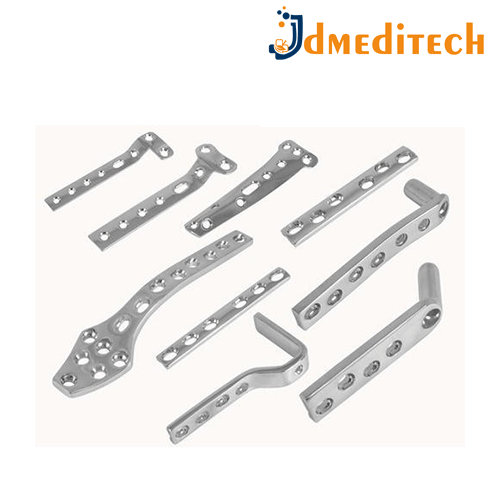
Bone plates are metal devices used in orthopedic surgery to stabilize fractured bones during the healing process. They are fixed to the bone using screws and serve as internal splints.
Features:
Made from stainless steel or titanium
Come in various shapes (straight, curved, T-shaped, etc.)
Designed for specific bones (femur, tibia, humerus, etc.)
Uses:
To align and stabilize broken bones
Common in long bone fractures or complex injuries
Can be used temporarily or permanently