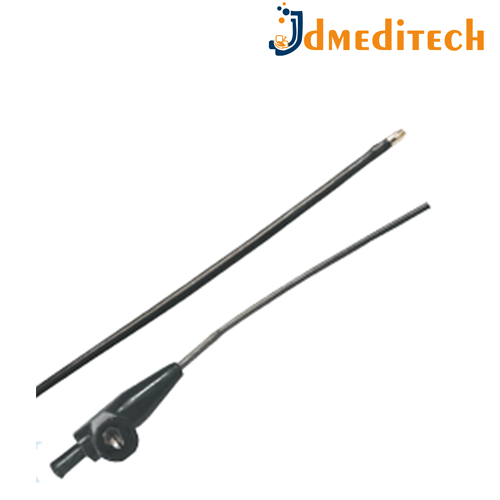
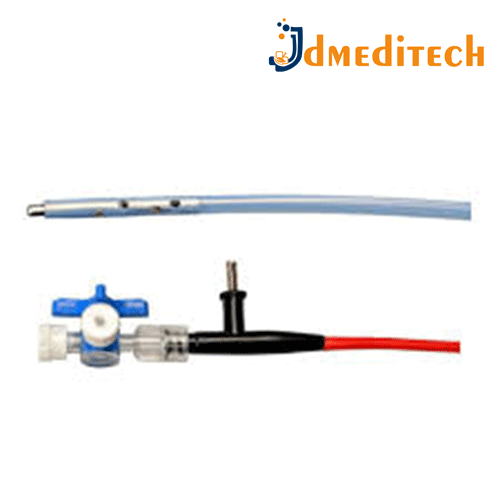
A Cystostome is a surgical instrument or catheter used to create an artificial opening (cystostomy) into the urinary bladder, typically through the abdominal wall, to allow urine drainage when the urethra is obstructed or not usable.
Key Features:
Sharp or Blunt Tip: For safe penetration into the bladder.
Metal or Plastic Construction: Ensures durability and sterilization.
Can be part of a kit: Sometimes includes a trocar or guidewire.
Compatibility: Often designed for use with suprapubic catheters.
Uses:
Suprapubic catheterization for patients with urethral stricture or trauma.
Emergency bladder drainage when urethral catheterization is not possible.
Bladder access for urological procedures.
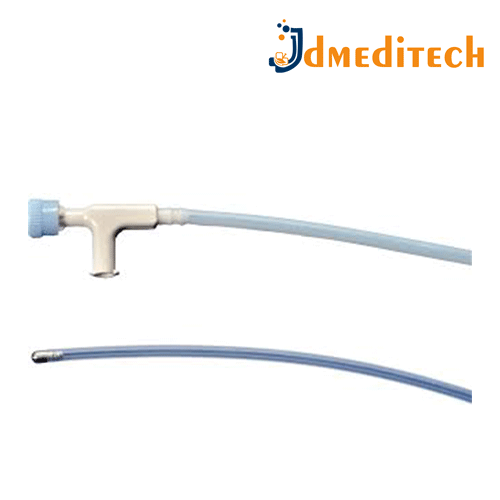
Endoscopy Spray Probe is a flexible, catheter-like instrument used during endoscopic procedures to deliver a fine spray of dye, medication, or other fluids directly onto internal tissues.
Features:
Flexible, slim design to pass through the endoscope’s working channel
Atomizes fluid into a fine mist for uniform coverage
Compatible with various endoscopes
Available in disposable or reusable forms
Uses:
Enhances visualization of mucosal patterns (e.g., during chromoendoscopy)
Delivers topical anesthetics, antibiotics, or hemostatic agents during endoscopy
Assists in identifying abnormal tissue areas in the GI tract or other internal organs.
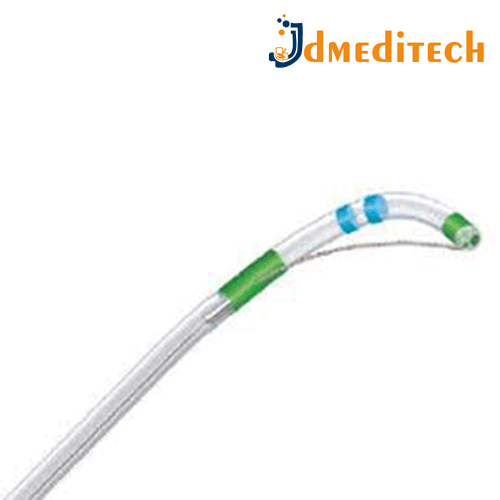
Sphincterotomes are flexible endoscopic instruments with a controllable cutting wire used to safely cut the sphincter of Oddi during ERCP.
Features:
Thin, flexible catheter with a wire cutting loop at the tip
The cutting wire can be extended or retracted to control incision length
Made of biocompatible materials suitable for endoscopy
Connects to an electrosurgical unit for precise cutting with cautery
Available in various sizes and tip designs
Uses:
Perform sphincterotomy to open the bile or pancreatic duct
Facilitate removal of stones or strictures
Improve bile or pancreatic juice flow
Commonly used in ERCP procedures for biliary or pancreatic diseases
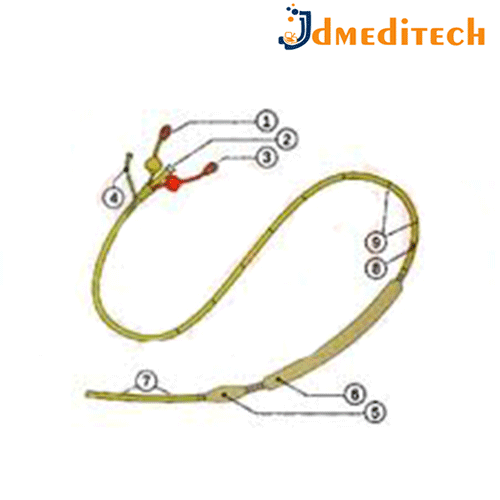
A Sengstaken Esophageal Balloon is a medical device used to control severe bleeding from esophageal varices (enlarged veins in the esophagus).
Features:
A flexible tube with two inflatable balloons:
Gastric balloon to hold the tube in place in the stomach
Esophageal balloon to apply pressure inside the esophagus
Multiple lumens for balloon inflation and gastric suction
Made of soft, durable material
Has ports for inflation and suction
Uses:
Emergency treatment of bleeding esophageal varices
Provides temporary tamponade (pressure) to stop bleeding
Used in critical care until definitive therapy (like banding or surgery)
Requires close monitoring due to risks of complications
A Coagulation Probe is a hemostatic device used in endoscopic procedures to control bleeding by delivering thermal energy to targeted tissues. It is commonly used in gastrointestinal (GI) and urological surgeries.
Key Features:
Thermal Coagulation: Uses electric current (monopolar or bipolar) to cauterize bleeding vessels.
Flexible & Disposable or Reusable: Designed for easy maneuverability through endoscopic channels.
Variety of Tip Sizes: To suit different anatomical and procedural needs.
Controlled Energy Delivery: Reduces risk of damage to surrounding tissues.
Uses:
GI Bleeding Control: Treats bleeding ulcers, varices, or vascular malformations.
Urology Applications: Coagulates tissue during procedures like TURP.
Polypectomy Assistance: Coagulates tissue base post-polyp removal.
Hemostasis During Biopsies: Prevents bleeding after tissue sampling.
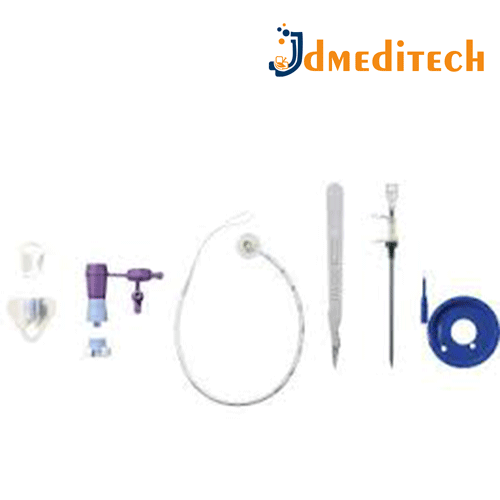
PEG Sets (Percutaneous Endoscopic Gastrostomy Sets) are medical kits used to place a feeding tube directly into the stomach through the abdominal wall using an endoscope.
Features:
Includes feeding tube, introducer needle, guidewire, dilator, and stoma plate
Designed for safe and sterile placement
Compatible with endoscopic guidance
Available in various tube sizes
Made of biocompatible materials
Uses:
Provides long-term enteral nutrition for patients unable to eat orally
Used in conditions like stroke, neurological disorders, or head and neck cancers
Minimally invasive alternative to surgical gastrostomy
Allows direct feeding into the stomach
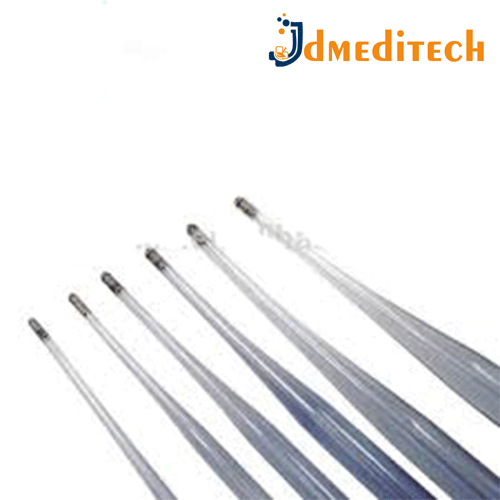
Esophageal Dilator Sets are medical instruments used to gradually dilate or widen narrowed sections of the esophagus, commonly due to strictures, scarring, or tumors.
Key Features:
Multiple Sizes: The set includes a series of dilators in increasing diameters for stepwise dilation.
Flexible or Semi-Rigid: Designed to pass smoothly through the esophagus with minimal discomfort.
Smooth Surface: Minimizes trauma during insertion.
Radiopaque Markings: Assist in positioning under fluoroscopy.
Uses:
Treat esophageal strictures caused by conditions like achalasia, GERD, or post-surgical narrowing.
Used during endoscopic or fluoroscopic procedures.
Helps restore the patient’s ability to swallow normally.
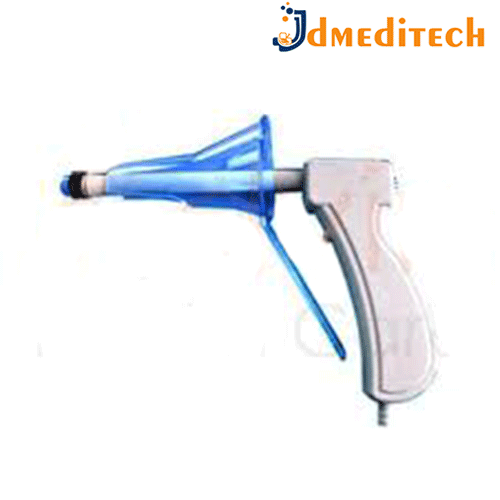
Hemorrhoid Band Ligators are medical tools used to treat internal hemorrhoids by placing a rubber band around the base of the hemorrhoid. This cuts off its blood supply, causing it to shrink and fall off.
Features:
Types: Suction or forceps-based
Compatible with anoscope
Single-use or reusable
Ergonomic design
Holds multiple rubber bands
Uses:
Treats Grade I to III internal hemorrhoids
Minimally invasive, done in outpatient settings
Quick recovery, no surgery needed
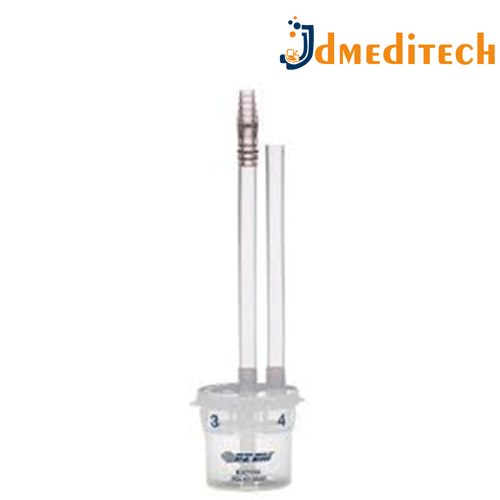
A Polyp Trap is a medical device used during colonoscopy or endoscopy to collect and retrieve polyps that are removed from the gastrointestinal (GI) tract.
Features:
Connects to suction tubing
Has multiple chambers (usually 4) to capture multiple polyps separately
Made of clear plastic for easy visibility
Disposable or reusable options
Helps prevent loss of specimens during suction
Uses:
Collects polyps or small tissue fragments during polypectomy
Ensures safe handling for pathological examination
Prevents clogging of suction system
Useful in colonoscopy and gastroscopy procedures
A Heating Coagulation Probe is a medical instrument used in endoscopic procedures to stop bleeding (hemostasis) by applying direct thermal energy to blood vessels or tissues.
Features:
Delivers controlled heat via a probe tip.
Often used with high-frequency energy sources.
Equipped with insulated shaft for targeted application.
Available in various diameters and lengths for different endoscopic tools.
Uses:
Coagulation of bleeding vessels during endoscopy.
Treating GI bleeding, ulcers, and vascular lesions.
Used in gastroenterology and surgical endoscopy for safe, effective hemostasis.